

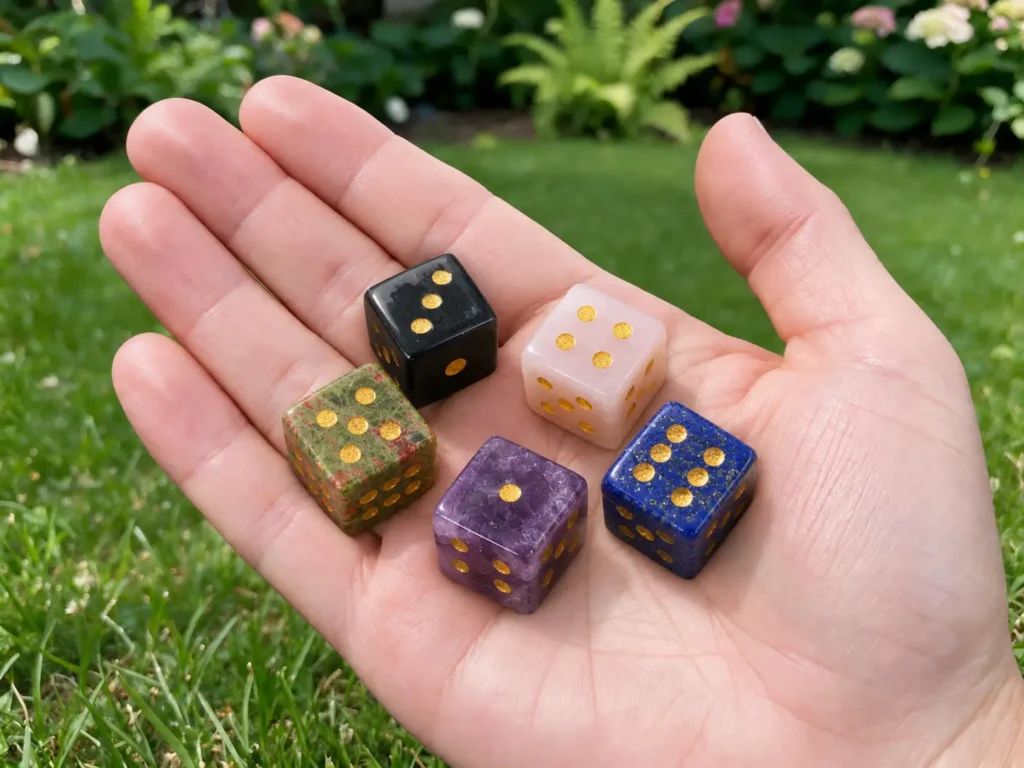
How to Make Gemstone Dice (DIY Lapidary Carving Guide)
Gemstone dice are handcrafted gaming cubes fashioned from solid natural mineral rough, precision-ground into six-sided polyhedrals with eased chamfered edges, polished to a mirror finish, and numbered with circular pips filled with metallic gold pigment. Combining natural crystal heft with crisp geometric symmetry, hand-carved dice upgrade tabletop gaming collections beyond molded resin. If you love lapidary crafts and want a rewarding workshop project for rock slabs, learning how to make gemstone dice transforms raw mineral rough into functional gaming treasures.
Unlike resin casting, carving gemstone dice requires working with mineral hardness, cleavage planes, and natural crystalline fractures. Achieving a fair, balanced roll demands ninety-degree perpendicular faces and tight dimensional tolerances across all six sides. In our workshop at Rock Tumble Lab, our team calibrated multiple mineral varieties to refine this process. Whether you have honed shaping skills through our tutorials on how to make a chakra stone car hanging, how to make an inlaid gemstone pendant, or how to make an inlaid gemstone heart pendant, crafting cubic geometry introduces advanced lapping techniques. For studio inquiries, visit our about page or reach out through our contact page.
Key Takeaways
- Finished Dimensions: Standard 16.0 mm cubic geometry with 0.8 mm to 1.2 mm chamfers to prevent chipping during rolls.
- Cutting Equipment: Diamond trim saw for rough cubing, plus a flat lap and 90-degree square to true opposing faces parallel.
- Grit Progression: Coarse shaping at 180 grit, smoothing through 360 and 600, pre-polishing at 1200, and final mirror polish with cerium oxide or 50,000 diamond paste.
- Pip Layout: Opposite-face sum of seven arrangement (1 opposite 6, 2 opposite 5, 3 opposite 4) marked with digital calipers.
- Water Drilling: Pips milled with a 1.8 mm diamond ball burr at 6,500 to 7,500 RPM under water to 0.6 mm to 0.8 mm depth.
- Metallic Inlay: Gold enamel paint squeegeed flush into pips, cured 24 hours, and micro-buffed.
Essential Materials for Making Gemstone Dice
Fabricating gemstone dice requires coordinating lapidary rock sawing and flat lapping tools with rotary engraving gear. When learning how to make gemstone dice, choosing dense, homogeneous mineral slabs free from structural veins prevents fracturing while grinding flat planes.
Selecting Mineral Slabs for Gemstone Dice Carving
Base mineral choice dictates cutting and polishing success. For balanced weight and durability during tabletop rolls, select mineral rough with Mohs hardness between 6.0 and 7.0 that lacks prominent cleavage planes. Slabs should measure 18 mm to 20 mm in thickness to yield a finished 16 mm cube after surface truing.
| Mineral Variety | Mohs Hardness | Fracture / Cleavage Properties | Practical Workbench Carving Guidance |
|---|---|---|---|
| Unakite | 6.0 – 7.0 | Uneven / Granular | Mottled green epidote and pink feldspar. Grinds evenly with high contrast against gold pips. |
| Rose Quartz | 7.0 | Conchoidal / Brittle | Translucent blush quartz. Use light pressure and continuous water to prevent internal fractures. |
| Black Obsidian | 5.0 – 5.5 | Conchoidal / Glassy | Volcanic glass that carves cleanly. Polish with cerium oxide for a jet-black mirror face. |
| Lapis Lazuli | 5.0 – 5.5 | Granular / Cleavable | Deep blue lazurite with pyrite flecks. Keep speeds under 6,500 RPM to protect softer calcite veins. |
| Green Aventurine | 7.0 | Granular / Tough | Quartzite with chrome mica platelets. Tough matrix withstands rolling without edge bruises. |
| Moss Agate | 6.5 – 7.0 | Conchoidal / Tough | Chalcedony with chlorite inclusions. Superb edge retention prevents micro-chipping during engraving. |
| Red Jasper | 6.5 – 7.0 | Conchoidal / Dense | Opaque microcrystalline quartz. Heavy mineral density delivers a solid roll on gaming trays. |
Inspect slabs under strong backlighting to verify that no fractures cross the cube core. For mineral classifications, review the GIA Gem Encyclopedia and geological data from the USGS Mineral Resources Program. If prepping rough from raw field rocks, our guide on rock tumbling media explains how to tumble preforms smoothly.
If you need raw agates, quartz crystals, or mixed lapidary-grade rough stones to cut clean slabs and preform cubes for gemstone dice, here are top-rated options:




Lapidary Equipment and Diamond Abrasives: How to Make Gemstone Dice
Precision flat geometry requires lapidary machinery to keep opposing faces parallel:
- Trim Saw: A 6-inch or 8-inch continuous-rim diamond trim saw running with water coolant.
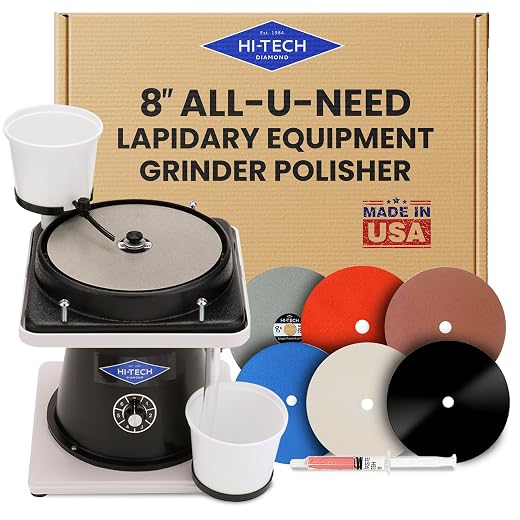
- Flat Lap Machine or Cabbing Unit: A variable-speed horizontal flat lap or vertical wheel with diamond discs (180, 360, 600, and 1200 grit).
- Cerium Oxide and Diamond Polishing Paste: Cerium oxide on felt pads for quartz minerals; 50,000-grit diamond paste on leather laps for jasper, agate, and obsidian.
- 90-Degree Machinist Square: A hardened steel engineer square (50×40 mm) to check perpendicularity between adjacent cube faces.
- Digital Calipers: Digital calipers with 0.01 mm resolution to verify cube dimensions and pip spacing.
- Wooden Dop Sticks and Low-Temp Wax: Dop sticks and low-temperature wax for holding cubes securely during grinding.
Pip Engraving Tools, Templates, and Metallic Inlay Supplies
Creating sharp, uniform circular pips requires dedicated rotary accessories:
- Flexible Shaft Rotary Machine: A flexible shaft machine with foot-pedal control (Foredom SR) operating at 4,000 to 9,000 RPM.
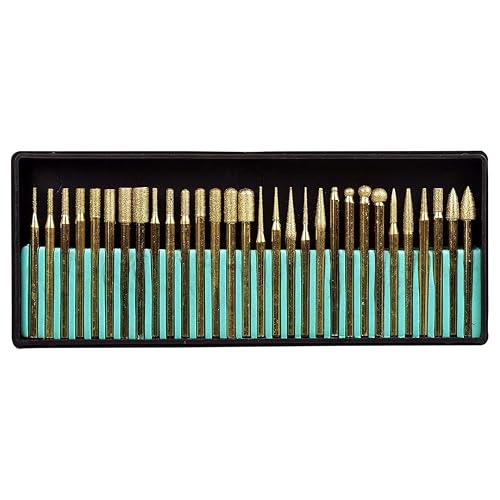
- Diamond Ball Burrs: Electroplated diamond ball burrs with 1.8 mm head diameter for boring neat concave pips.
- Water Immersion Work Basin: A shallow dish filled with 10 mm of water to submerge cube faces during drilling.
- D6 Layout Grid Template: An acrylic drafting template showing exact millimeter coordinates for standard six-sided dice.
- Metallic Gold Enamel Paint: High-pigment metallic gold oil enamel or liquid acrylic gold leaf paint.
- Flexible Squeegee and Solvent: Silicone wiper or plastic card to squeegee paint overfill, plus alcohol swabs.
Step-by-Step Workshop Process: How to Make Gemstone Dice
Crafting a gemstone die is an exercise in symmetry. Opposing faces must stay parallel, and adjacent corners must meet at precise 90-degree angles. Follow this sequence to ensure your finished die looks sharp and rolls fairly.
Workshop Benchmarks for Assembling and Carving Gemstone Dice
Our workshop technicians tracked operational metrics across multiple mineral batches to establish safe limits:
| Operational Phase | Tooling & Abrasive | Rotary / Wheel Speed | Coolant Protocol | Observed Failure Modes & Fixes |
|---|---|---|---|---|
| Rough Cube Sawing | 6-Inch Diamond Trim Saw | 1,725 RPM | Continuous water bath | Blade wander: Feed stone slowly with gentle manual pressure. |
| Face Truing & Squaring | 180-Grit Diamond Flat Lap | 600 – 800 RPM | Steady water drip | Out of square: Check frequently against machinist square. |
| Intermediate Smoothing | 360 & 600-Grit Diamond Discs | 800 – 1,000 RPM | Continuous water spray | Scratch retention: Clean stone between grit transitions. |
| Edge Chamfering | 600-Grit Diamond Disc | 600 RPM | Wet disc surface | Uneven bevels: Hold cube at strict 45-degree angle against wheel. |
| Pre-Polish & Final Polish | 1200 Grit & Cerium Oxide | 500 – 700 RPM | Damp slurry paste | Friction burn: Keep lap damp; avoid dry buffing. |
| Pip Drilling & Milling | 1.8 mm Diamond Ball Burr | 6,500 – 7,500 RPM | Submerged water bath | Bit skitter: Mark starter dimple with an aluminum scribe. |
| Gold Inlay & Cure | Metallic Gold Enamel | Manual application | Room temperature (72°F) | Pigment smearing: Wipe flush immediately before curing. |
Step 1: Slicing Slabs and Rough-Cutting Cubes on the Trim Saw
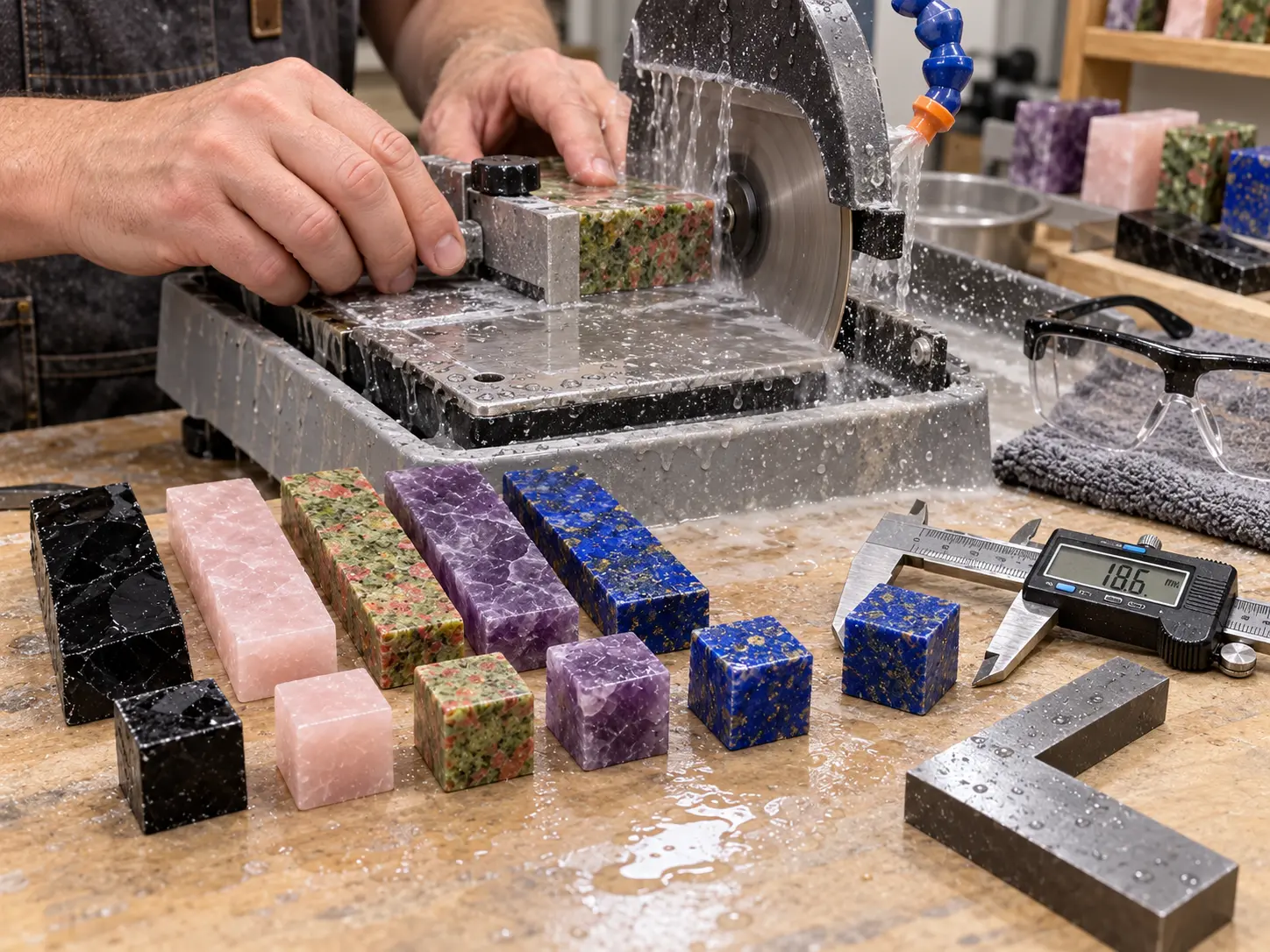
When beginning how to make gemstone dice, cutting an accurate preform cube saves extensive grinding time on the lap:
- Slab Thickness Calibration: Cut a mineral slab 18.5 mm to 19.0 mm thick, leaving 2.5 mm of stone to grind away during truing.
- Square the Slices: Feed the slab through the saw into 18.5 mm square strips, using a clamped fence guide to maintain straight cuts.
- Chop Individual Cubes: Cross-cut strips into 18.5 mm cubes. Rinse in clean water to wash away slurry and inspect for fractures.
Step 2: Truing 90-Degree Faces and Calibrating 16 mm Dimensions on a Flat Lap
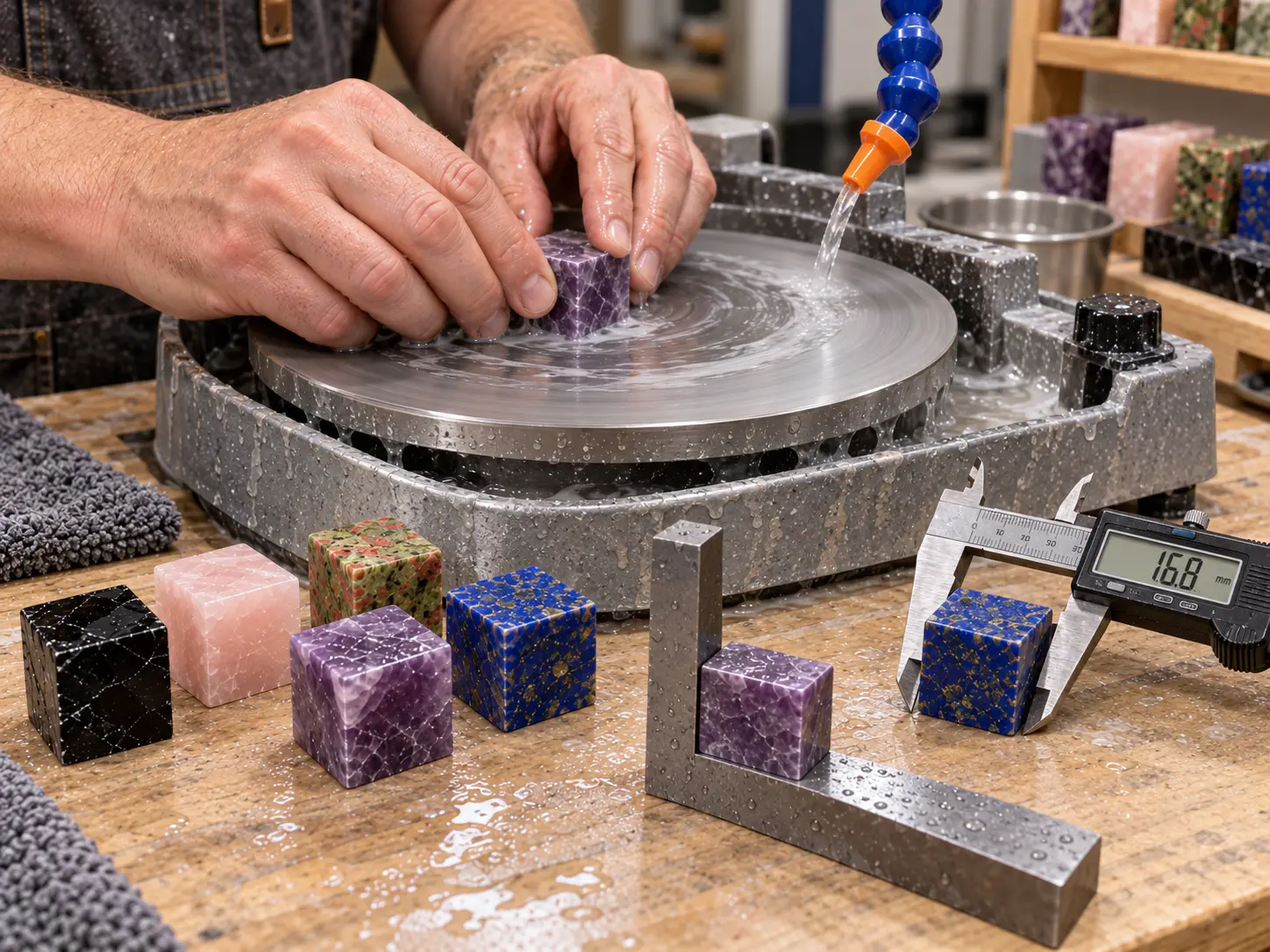
Transforming the cut block into a true mathematical cube requires systematic flattening across paired faces:
- Establish Face 1 (Reference Plane): Press one face flat against a wet 180-grit diamond disc. Rotate 90 degrees every ten seconds to avoid grinding a taper until completely flat.
- Grind Opposing Face 2: Turn 180 degrees to grind the opposite face. Measure all four corners with calipers until parallel at 16.8 mm.
- Square Adjacent Face 3: Grind the third face against the 90-degree square, checking under direct light until no gaps show.
- Grind Opposing Face 4: Grind opposite face 3, measuring with calipers until thickness matches 16.8 mm.
- Finish Faces 5 and 6: Square the final pair against existing planes, calibrating all three axes to 16.8 mm.
Step 3: Chamfering Edges and Rounding Corners for Smooth Rolling Action
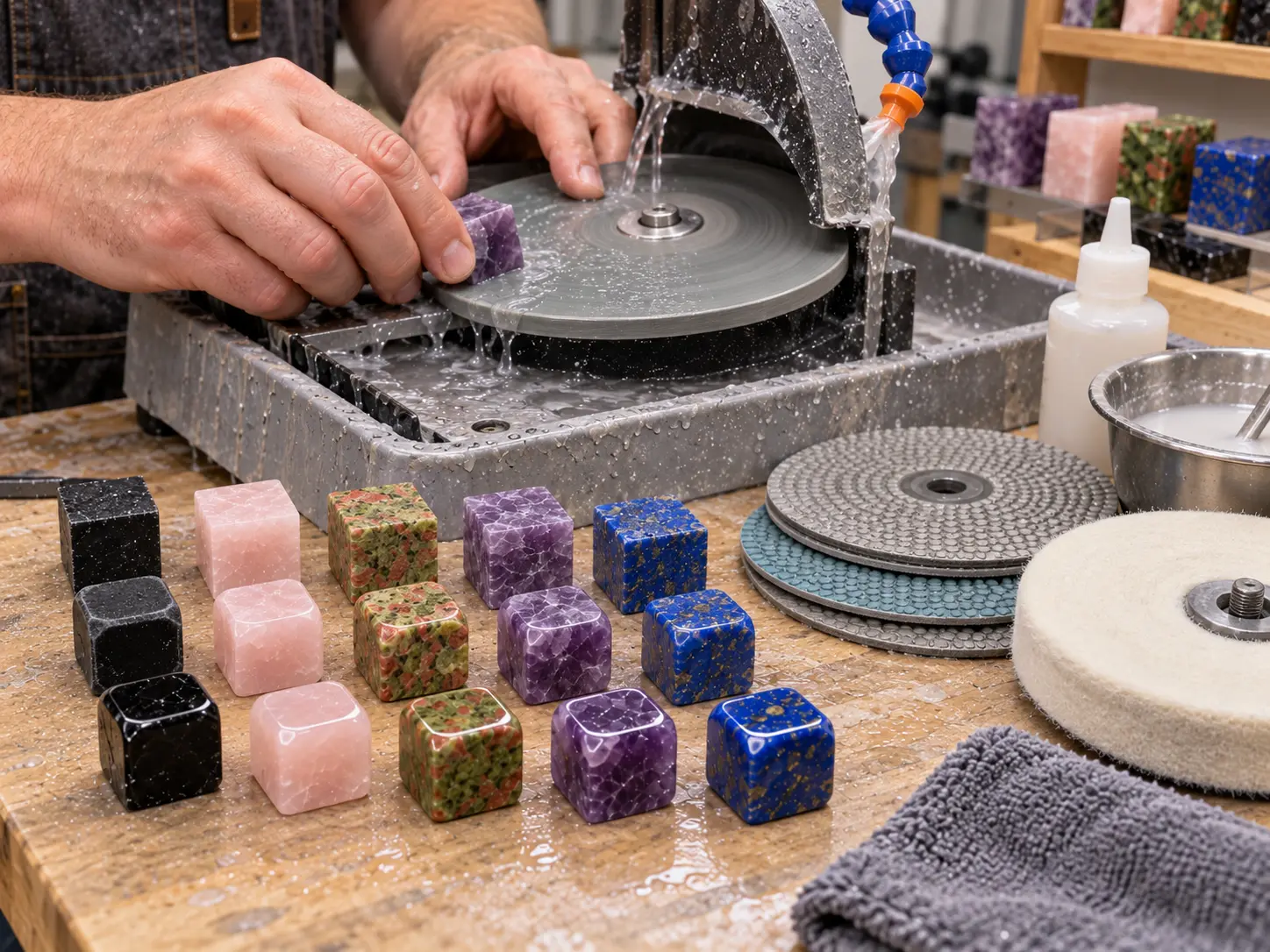
Sharp mineral edges chip easily when rolled on hard surfaces. Chamfering creates durable bevels that distribute impact force:
- Set Grinding Angle: Mount a 600-grit diamond disc running at 600 RPM.
- Bevel the 12 Edges: Hold the cube at 45 degrees against the disc. Sweep three light passes along all twelve edges to create uniform 0.8 mm to 1.2 mm bevels.
- Round the 8 Corners: Touch each corner against the wheel with a rolling wrist motion to form smooth spherical transitions. For contour shaping techniques, see our guide on DIY gemstone worry stones.
Step 4: Lapping and Mirror-Polishing Through Cerium Oxide and Diamond Paste
Polishing must occur before pip drilling so flat faces resist staining when paint is applied:
- Progress Through Medium Grits: Lap all six faces on 360-grit, then 600-grit discs for 20 seconds per side. Wash thoroughly between grits to prevent contamination.
- Pre-Polish with 1200 Grit: Work each face on a 1200-grit lap until satin-smooth with no scratches under a 10x loupe. Dimensions should settle at 16.0 mm (+/- 0.1 mm).
- Final Mirror Polishing: For quartz, unakite, and aventurine, polish on a felt lap with cerium oxide slurry at 500 RPM for 30 seconds until glassy. For jasper, obsidian, or lapis, use 50,000-grit diamond paste on a leather lap. Wash with dish soap.
Step 5: Laying Out Pips Using the Opposite-Face Sum of Seven Rule
Standard six-sided gaming dice follow a universal rule: opposite faces must always add up to seven:
- Opposing Pair Rules:
- 1 is opposite 6
- 2 is opposite 5
- 3 is opposite 4
- Right-Handed Standard Arrangement: Place 1 on top and 2 forward. On western dice, 3 sits on your right, 4 on the left, 5 in back, and 6 on the bottom.
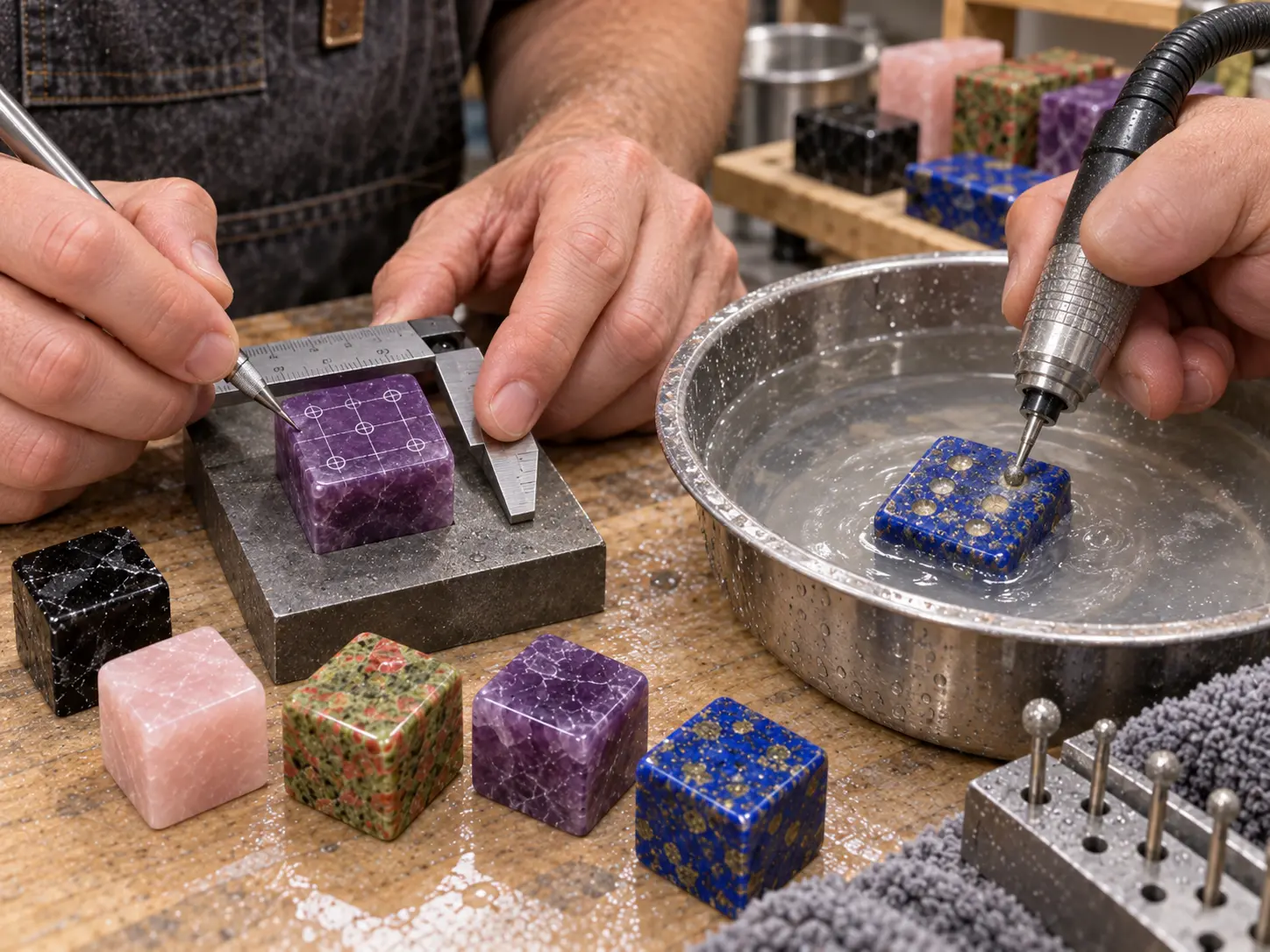
- Marking Pip Centers: Tape polished faces and mark pip centers on a 3×3 grid with calipers and pencil:
- Single pip (1): Center point at (8.0 mm, 8.0 mm).
- Two pips (2): Diagonal corners 4.0 mm from edges.
- Three pips (3): Diagonal line through corners and center.
- Four pips (4): Four corners placed 4.0 mm from edges.
- Five pips (5): Four corners plus one center pip.
- Six pips (6): Two vertical rows of three pips spaced 3.5 mm from side margins.
- Prick Starter Marks: Prick the mineral through the tape at each mark with an aluminum scribe to create starter dimples. Peel tape away.
For milling crisp circular pips, chamfering cube corners, and maintaining steady fingertip control under water coolant, these rotary flex-shaft attachments and precision diamond burrs are essential:


Step 6: Drilling and Milling Circular Pips with a Diamond Ball Burr
Precision pip drilling requires steady rotary control under water coolant:
- Submerge in Water Basin: Rest the polished die in a dish with 10 mm of water so the top face sits 2 mm submerged, trapping stone dust.
- Mount Rotary Tooling: Chuck a 1.8 mm diamond ball burr into your handpiece, running between 6,500 and 7,500 RPM.
- Peck-Drill Pips: Steady wrists on the dish rim. Lower the spinning burr vertically into dimples using 2-second pulses to drill 0.6 mm to 0.8 mm deep, clearing slurry frequently.
- Rinse and Verify: Rinse under running water. Inspect pips under magnification to confirm uniform depths and sharp edges without chips.
Step 7: Inlaying Gold Enamel Paint and Finishing Flush Surfaces
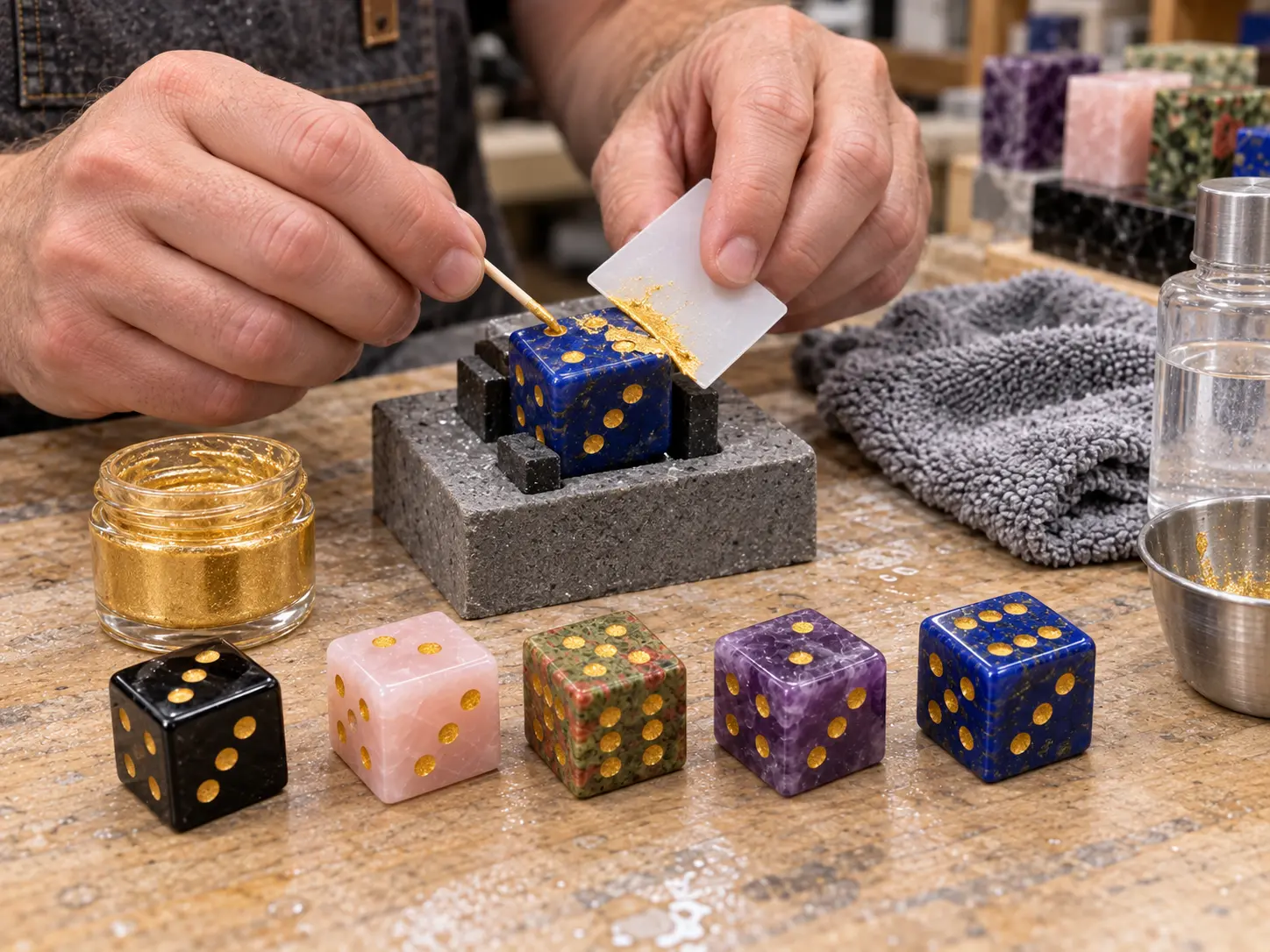
Metallic inlay makes recessed pips stand out with crisp contrast against colorful mineral backgrounds:
- Clean Surfaces: Wipe the die with 99% isopropyl alcohol and let dry 5 minutes.
- Apply Metallic Paint: Place a droplet of metallic gold enamel into each pip with a toothpick, coating the cavity floor and walls.
- Squeegee Flush: While wet, draw a plastic scraper across the face in one level motion, wiping excess paint while leaving pips filled.
- Clean Haze: Wrap an alcohol-dampened cloth around a flat wooden block and glide across faces to remove paint haze.
- Cure Paint: Allow enamel to cure 24 hours at room temperature, then buff with a microfiber cloth to restore brilliant surface luster.
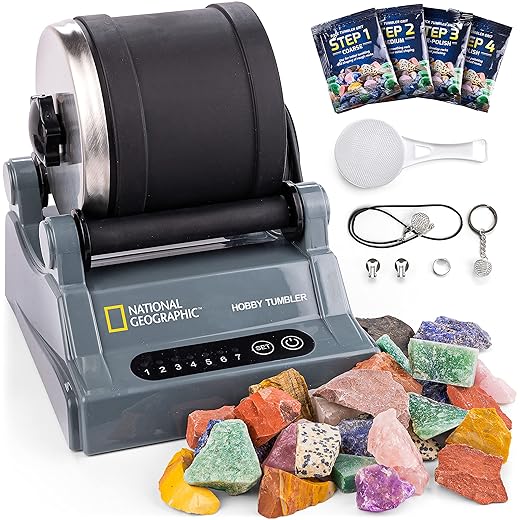
To true 90-degree cube faces, polish silicate minerals to a mirror gloss with diamond paste, or tumble lapidary offcuts, here are top-performing flat lap machines, polishing compounds, and tumblers:

Troubleshooting Common Defects in DIY Gemstone Dice Making
Carving natural minerals into geometric solids presents specific technical challenges. Refer to this troubleshooting guide to resolve fabrication issues:
| Defect Encountered | Probable Root Cause | Practical Workbench Correction |
|---|---|---|
| Die Rolls Biased (Unbalanced) | Opposing faces are not parallel or corner chamfers are uneven. | Measure all three axes with calipers; true low spots on a 600-grit lap and balance corner bevels. |
| Chipped Edges During Rolling | Chamfers are too sharp or were cut under 0.5 mm. | Re-grind edge chamfers to a full 1.0 mm flat at 45 degrees using a 600-grit diamond disc. |
| Micro-Chipping Around Pip Holes | Rotary speed too slow (under 5,000 RPM) or dull diamond burr. | Increase speed to 7,000 RPM; use fresh diamond ball burrs under continuous water submersion. |
| Diamond Burr Skitters Across Stone | No starter divot created before spinning burr contact. | Prick a starter dimple with an aluminum scribe; enter at a 45-degree angle before swinging vertical. |
| Paint Pulls Out During Wiping | Cloth was wrapped around fingers rather than a rigid flat block. | Always back your cleaning cloth with a flat wooden block so it cannot dip into recessed pips. |
| Stone Cracks During Sawing | Excessive blade feed rate or pre-existing thermal stress. | Feed stone slowly through the diamond trim saw; use plenty of water coolant with rust inhibitor. |
For additional stone carving and jewelry making methods, explore our guides on how to make a gemstone heart pendant and how to make a fluted gemstone heart pendant.
Frequently Asked Questions About How to Make Gemstone Dice
What Is the Standard Size for Handcrafted Gemstone Dice?
The industry standard for tabletop six-sided dice (D6) is 16.0 mm (approx. 5/8 inch) across opposing faces, with an acceptable handmade tolerance of +/- 0.3 mm. Miniature dice measure 12.0 mm, while jumbo display dice measure 20.0 mm to 25.0 mm. For beginners, 16.0 mm offers an ideal balance of grip, pip spacing, and stone stability during lapping.
Are DIY Gemstone Dice Balanced for Tabletop Gaming?
Handmade gemstone dice are balanced well for tabletop RPGs and board games, provided opposing faces are parallel within 0.1 mm and corner chamfers are uniform. Natural mineral inclusions (like pyrite flecks in lapis lazuli or quartz veins in jasper) introduce minor density variations, but their impact on roll fairness is negligible on padded rolling trays. Avoid rough with hollow cavities or vugs.
What Rotary Tool and Speed Are Best When Learning How to Make Gemstone Dice?
When learning how to make gemstone dice, the best rotary tool is a flexible shaft machine (such as a Foredom SR) paired with a foot pedal. Operating diamond ball burrs at 6,500 to 7,500 RPM under water provides smooth cutting without tool chatter. Handheld battery rotary tools lack the torque needed to mill silicates cleanly.
Which Minerals Are Easiest for Beginners Learning How to Make Gemstone Dice?
Beginners should start with microcrystalline quartz like red jasper, unakite, or green aventurine (Mohs 6.5 to 7.0). These minerals grind smoothly, lack fragile cleavage planes, resist chipping, and take a high polish. Avoid soft minerals like fluorite or calcite for initial builds. For tumbling preforms, see our rock tumbling beginners guide.
How Do You Prevent Gemstones from Chipping While Drilling Pips?
Prevent mineral chipping during pip drilling through three rules: submerge the die face under 2 mm of water, maintain rotary speeds between 6,500 and 7,500 RPM, and use light pulsing contact rather than heavy pressure. Water carries away rock slurry that would otherwise clog diamond grains and build friction heat.
Where Can I Learn More About Mineral Lapidary and Rock Tumbling?
Explore mineral profiles and lapidary references through the GIA Gem Encyclopedia. If you have questions about rock trimming, lap discs, or tumbling batches, visit our about page or contact our team through our contact page.
 Love Rock Tumbling?
Have a question? Use the form above to submit your question or comment.
I love hearing from you and seeing what you made!