
A tumbler that stops spinning usually has a power, load, alignment, grip or drive issue, so start with safe checks before considering a repair. A stalled batch can waste time and interrupt a polishing cycle, but the symptom does not prove a part has failed.
The drive belt is the rubber loop that transfers motion from the motor to the drive rollers. The checks below move from simple external causes toward repair decisions, with the machine’s own instructions guiding every model-specific step. Tumbler designs and procedures differ, so a solution that suits one model may not suit another.
Use the owner’s manual for any step that involves opening or adjusting the machine.
Quick diagnosis: no power, stationary rollers or rollers moving but barrel stuck?
If the motor is silent, the rollers stay still, or the barrel slips over moving rollers, each symptom points to a different part of the drive path. What moves helps narrow the problem, but sound or movement alone cannot confirm which part needs repair.
Observe the tumbler from a safe distance, without touching parts while they move. A motor sound does not prove that the drive is working: the motor may run while a broken belt prevents the rollers from turning.
No sound or movement
A silent, still tumbler may have lost power, or a control may have stopped the machine. It could also have an internal fault, so treat silence as a clue rather than a diagnosis. Note whether the switch or timer appears active and whether the tumbler showed signs of movement before stopping.
Do not assume the motor has failed just because you hear nothing. Some models use a timer or protective control that interrupts operation, while a loose connection can also stop the machine. The next checks should follow the operating instructions for your model, not a guess based on how another tumbler behaves.
Motor runs, but the rollers stay still
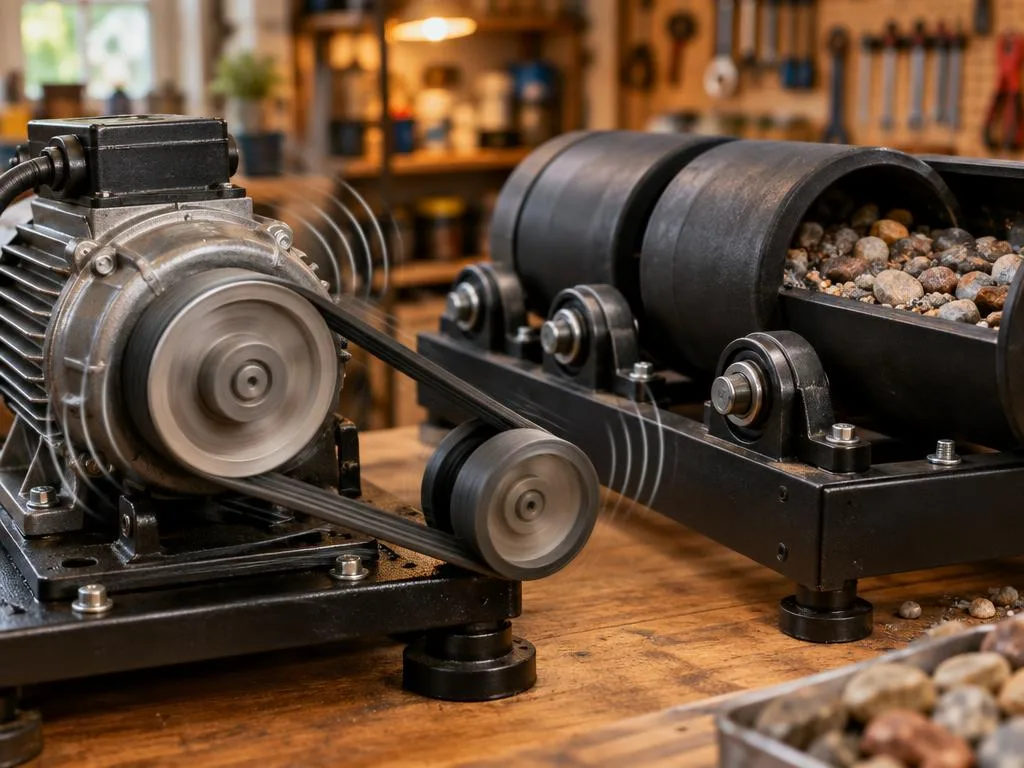
A running motor with stationary rollers can point to a broken, displaced or ineffective belt. The motor may make a steady sound while the drive path fails to transfer motion. That symptom can also have another cause, so it does not confirm that the belt itself is broken.
Watch only from outside the machine. If the roller area is hidden, do not remove the barrel or a guard to watch the tumbler run. The manual determines which parts you may inspect, and an unfamiliar sound or repeated stall is a reason to stop rather than probe further.
Rollers turn, but the barrel does not
When rollers move but the barrel stays still or slips, the problem is more likely at the barrel-to-roller contact than at the motor. A poorly seated barrel, uneven load, residue or worn contact surfaces can interfere with grip. These signs point toward an area to check, not a confirmed failure.
A barrel that turns briefly and then slips may respond differently from one that never moves. Notice whether the barrel shifts, rocks or remains in place while the rollers turn. That observation helps you describe the issue clearly without reaching toward the running parts.
- No power or sound from the tumbler.
- Motor sound with stationary rollers.
- Moving rollers with a slipping or stationary barrel.
Use those three observations to describe what the machine does, not to name a failed part. The distinction matters because a motor sound alone does not establish that the belt, rollers or barrel are moving together.
Stop the test if the tumbler makes a new grinding sound or repeatedly stalls.
Safety first: switch off and unplug before inspecting moving parts
Before touching the barrel, belt or rollers, switch the tumbler off, unplug it and wait for all movement to stop. Unplugged means disconnected from its power source, not merely switched off.
Disconnect the tumbler before servicing it or changing accessories. Keep the machine on a stable, dry work surface, and follow the safety and maintenance instructions written for its model.
Once the barrel and rollers stop, handle them only as the manual allows. Do not reach toward moving parts during a powered observation, even if a sound or shift seems easy to check by hand. Loose sleeves, hair, tools and cords should stay clear of the machine while it runs.
Keep water and cleaning liquids away from the motor and electrical parts. A dry work area also makes it easier to spot residue or damage without introducing another hazard. If the surface is wet, move the unplugged tumbler only when you can do so safely.
A Harbor Freight 6 lb. dual-drum tumbler manual warns against overloading the machine. Capacity and safe handling instructions still depend on the model, so do not use the size of another tumbler to judge yours.
Never service a plugged-in machine or treat its housing as a routine inspection point. Opening an electrical housing can expose wiring and components that require trained repair. A visual check from outside is not permission to remove a cover or reach inside.
If an inspection requires removing a part, first confirm that the manual describes that exact procedure. Some machines allow specific user checks; others reserve internal work for a repair professional. A familiar-looking design is not enough to assume the steps are interchangeable.
Stop if the tumbler tips, shifts on its work surface or has a damaged plug. Do not steady it by putting a hand near moving parts. Wait until it is unplugged and still before deciding whether it can be moved or inspected.
Do not leave a powered tumbler unattended if its operation seems unusual. A new rattle, burning odor or repeated stop deserves attention, not a longer test run. Use the manual’s shutdown guidance and keep the machine disconnected if you are unsure.
Keep children and pets away from the work area while the tumbler operates or while you handle its parts. Store loose tools where they cannot roll into the machine. These simple steps reduce the chance that a routine check turns into an injury.
Use only the accessories and handling steps approved for your model. Do not force a barrel into position or improvise a tool to move a drive part. Resistance may signal that the part is misaligned or that the procedure is not intended for the user.
If the manual does not clearly authorize an inspection or adjustment, leave the housing closed.
Check the outlet, switch, timer and model-specific operating instructions
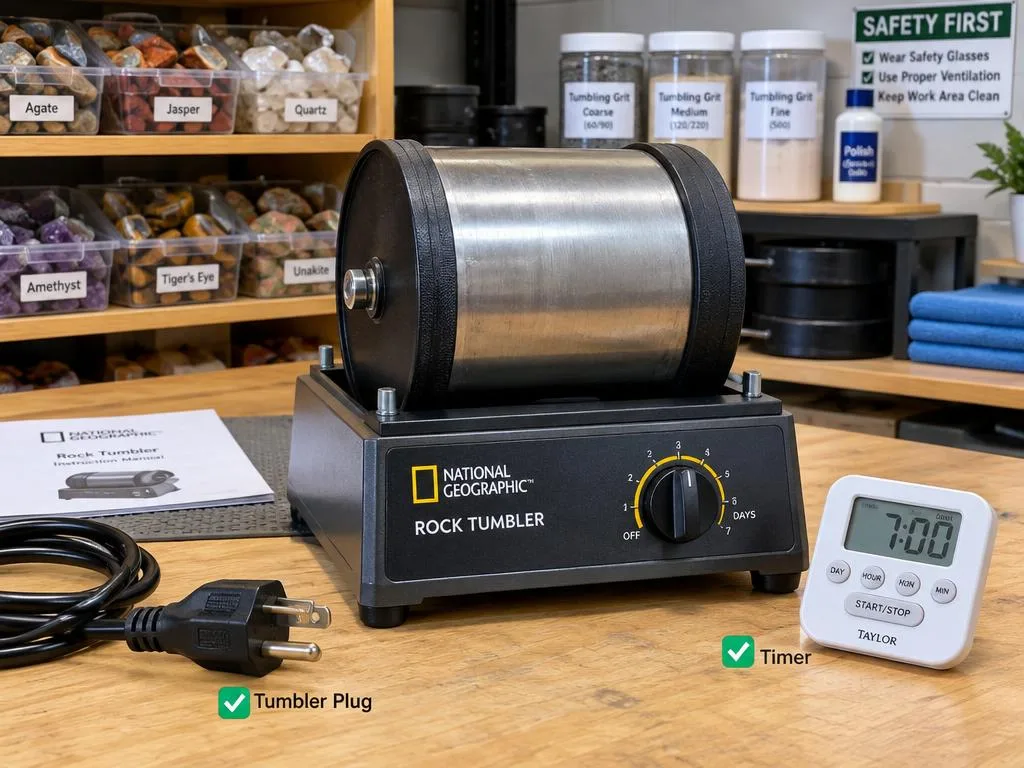
A secure plug and correctly set switch or timer can rule out a simple interruption before you inspect the drive system. External checks can identify a control or supply issue without opening the tumbler.
Do not use a tumbler with a worn, cut or damaged power cord. Check the visible power path and controls only as far as the manual permits.
Confirm the external power path
With the machine switched off, check that its plug sits securely in the outlet. If it connects through an external GFCI, check whether that device needs a reset. Do not open an outlet or attempt to change household wiring.
If safe, test the outlet with a known-working device that does not exceed the outlet’s limits. A working lamp can show that an outlet supplies power, but it cannot test the tumbler’s motor or controls. Stop if the outlet, plug or surrounding area looks damaged.
Inspect the visible cord along its length for cuts, fraying, crushed areas or worn insulation. A damaged or worn cord should be repaired or replaced immediately. Do not tape over damage or keep using the tumbler while waiting to see whether the cord still works.
An undersized extension cord can cause a drop in line voltage, leading to power loss and overheating. Use an extension cord only when the tumbler’s instructions allow one and specify requirements. Do not substitute a thinner or longer cord because it happens to fit the plug.
Check controls and operating limits
Check whether the switch is in the correct position and whether a timer has reached its stop point. Some controls need a deliberate setting before a cycle begins. Compare the actual setting with the model’s instructions instead of assuming all rotary tumblers use the same control layout.
A GFCI reset, timer setting or control position can explain an interruption, but repeated resets are not a repair. If a protective device trips again, stop using the tumbler and seek guidance. Repeatedly restoring power can hide a problem that needs attention.
Operating time differs by model. WireJewelry single- and double-barrel rotary tumblers are designed to run 24 hours a day for several weeks at a time. Other tumblers may have different limits, so follow the manufacturer’s instructions rather than applying that runtime to every machine.
A timer may control minutes or hours, while another model may have a continuous-run switch. Read the manual to learn what the control does and whether it can stop the motor automatically. Years of experience with one design do not make its settings a rule for another.
- Inspect the visible power path, including the plug, cord and any external GFCI.
- Verify the switch, timer and model instructions for the intended operating cycle.
Do not power the tumbler if its cord is worn, cut or otherwise damaged.
Check barrel placement, rated load and roller contact
If a barrel is crooked, too heavily loaded or sitting outside its intended roller position, the drive may fail to turn it reliably. Position and load can affect how the barrel meets the rollers.
Use the capacity and loading instructions for your own model, not a universal fill line. Check seating while the machine is unplugged and still.
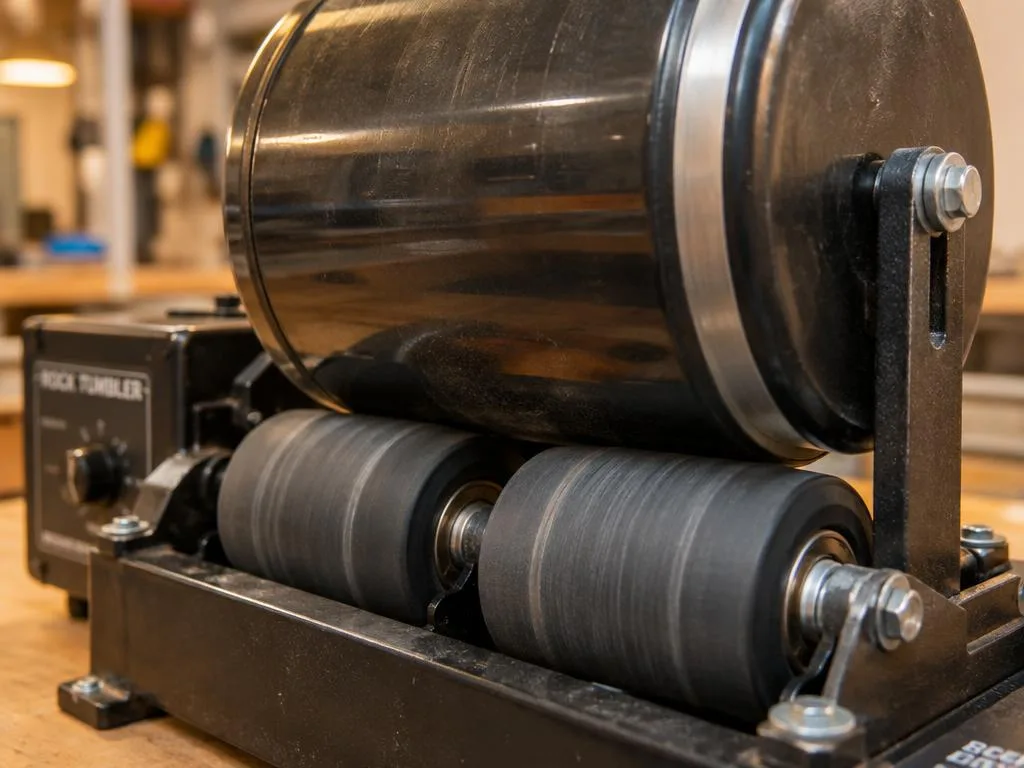
Confirm the barrel sits correctly
With the tumbler unplugged, check that the barrel rests in its intended place between the rollers. Look for a tilted position, an edge outside the roller path or a lid or accessory that prevents normal seating. Compare the placement with the manual’s picture or directions.
Do not force a barrel into place or shift it while the rollers are moving. A small change in position can matter because the rollers need steady contact with the barrel. If the barrel does not sit as the manual shows, check for a visible obstruction before attempting another run.
Barrel position can also change if the machine sits unevenly. Check the work surface and the tumbler’s feet while it is unplugged. A stable, level surface helps the barrel remain in its intended position, but do not add shims or alter the machine unless its manual permits that adjustment.
Match the load to the model
Check the rated capacity in the manual rather than judging by weight alone. Stones, media and water all take space, and a load can be too large even when the barrel does not feel especially heavy. Keep the combined load within the model’s stated limits.
Fill guidance is model-specific. For optimum action, a Diamond Pacific rotary tumbler barrel should be approximately two-thirds full of combined media and stones or parts. Blue Marble NGTUMBLER3LB instructions say to load rocks between halfway and two-thirds full.
Those figures apply to the named models, not every tumbler barrel. A plastic barrel may have different capacity and loading directions from another design. Do not copy a fill level from a different brand or size when your own manual gives a different instruction.
Overfilling can reduce tumbling action and strain a small drive. Too much material may also leave less room for the rocks and media to move as intended. Remove excess only when the manual explains how to adjust the load safely.
A load may appear acceptable by volume but still exceed the model’s weight limit. Account for rocks, media and any other material the instructions include in the total. The barrel’s shape and material do not replace a rated capacity.
- Seat and align the barrel in its intended roller position.
- Check the manual’s rated load for stones, media and other contents.
- Remove excess load only as directed by the manual.
If an overload sensor has stopped a Blue Marble NGTUMBLER3LB, remove some rocks, unplug the unit, then plug it in again to reset it. Do not repeatedly switch the tumbler back on without following those steps.
Recheck the barrel load: A scale and cushioning media can help you assemble a correctly filled load after checking your model's rated capacity.




Inspect belt condition and tension only as your model’s manual directs
A tumbler that sounds as though it is running but does not turn its rollers may have a belt that is broken, displaced or no longer driving effectively. That symptom can point to the drive belt, but it does not confirm a belt failure.
Inspect or adjust the belt only when your model’s manual permits that specific procedure. A motor may run while a failed belt leaves the rollers still, and a stretched belt may lose drive under resistance.
Recognize a loose, broken or displaced belt
If the manual permits a visual inspection, look for a belt that appears broken, displaced, cracked or slack. These visible signs can explain why the motor drive does not turn the rollers. They do not show whether the motor, a pulley or another part also needs attention.
A stretched belt may seem to work when the barrel is empty, then lose grip when the load adds resistance. A belt can also shift out of place. Do not touch it to test its tension unless the manual gives a safe method for doing so.
The sound of a running motor is not a reliable test of belt tension. Listen and observe from outside the machine, then switch it off if operation becomes abnormal. Never place a hand near a belt or drive part while the tumbler is powered.
A belt that looks intact may still fail to transfer enough motion. Wear, age and the model’s design can affect performance, but appearance alone cannot settle the cause. Record what you observed and follow the troubleshooting directions for that exact tumbler.
Follow the model-specific inspection procedure
WireJewelry recommends checking belt tension before each use. For its models, use the manual’s approved method and access points rather than borrowing a procedure from another tumbler.
Do not move the motor, tighten a belt or replace one based on generic advice. Belt tension and access vary by model, and incorrect adjustment can damage the drive or create another fault. Follow the manufacturer’s exact steps and use the correct replacement part if the manual calls for one.
Check whether the instructions name a specific belt size or part. A belt that looks similar may not fit or transfer motion correctly. Do not stretch a replacement over pulleys or alter the drive to make an unapproved part fit.
If the manual describes a user inspection, follow its order and stop if the machine does not match the pictured parts. Do not assume a missing cover or different fastener is a harmless variation. Contact support before continuing when the design differs from the instructions.
Some manuals give a tension check but do not authorize replacement by the owner. Treat those as separate procedures. A permitted visual check does not mean the housing can be opened or the motor moved.
If the belt cannot be inspected without opening a housing the manual does not authorize, contact the manufacturer for guidance.
Clean the barrel exterior and rollers; check for wear or obstruction
If the rollers turn but a cleanly seated barrel slips, residue or worn contact surfaces may be preventing reliable grip. Clean, dry surfaces help the barrel meet the rollers as intended.
With the tumbler unplugged, wipe the barrel exterior and accessible roller surfaces clean and dry. Keep water away from the motor and electrical parts.
Remove residue without wetting electrical parts
Remove the barrel only as the manual allows, then wipe its exterior with a dry cloth. Check the accessible roller surfaces for dust, dried residue or other buildup. Do not pour water over the machine or let cleaning liquid run into the motor area.
A wet, soapy or oily rubber barrel may not rotate well on the rollers, even when the rollers are spinning. Dry the barrel fully before placing it back. A slick surface can reduce friction, so clean away residue without adding a coating that changes the contact.
If a cloth does not remove buildup, use only a cleaning method approved for the barrel material. Some barrels are plastic, and harsh products or rough tools may damage their surface. The manual should guide cleaning choices for the particular tumbler and barrel.
Check the full contact area rather than only the part you can see at first glance. A patch of residue can make the barrel slip at one point in its rotation. Turn the barrel by hand only while it is removed and the machine is unplugged.
Look for worn contact surfaces or obstructed rollers
Look for cracks, misshapen areas or obvious wear on the barrel and accessible rollers. Check for an object caught near a roller, but do not reach past guards or into a housing. A damaged contact surface may need a manufacturer-approved replacement.
Do not sand a roller or barrel to change its grip. Do not add a rubber band, hose or other improvised material. Those fixes can shift, interfere with the drive or conceal damage that needs a proper replacement.
Keep cleaning separate from lubrication. Oil can help specified moving parts, but oil on the barrel-to-roller contact area makes grip worse. WireJewelry recommends a small drop of oil on drive-shaft bushings before first use and once or twice per year afterward.
That oiling guidance applies to WireJewelry models and the named bushings, not every surface or brand. Follow your manual for the exact part and amount. If it does not identify a part for lubrication, do not guess based on a similar-looking tumbler.
After cleaning, check that the barrel sits in its intended position before using the machine again. If the barrel still slips on clean, dry surfaces, stop trying to improve grip with household products. Wear or another drive issue may need a model-approved repair.
Do not put lubricant on the surfaces that need to grip the barrel.
External cleaning and inspection: With power disconnected, use a small brush and clean cloth on external surfaces; a loupe can help inspect visible wear.


When to stop and contact the manufacturer rather than attempt an electrical repair
If the tumbler still stalls after safe external checks, or shows any sign of electrical damage, stop using it and seek repair guidance. Persistent trouble is a reason to stop, not to test the machine repeatedly.
Do not attempt electrical, motor or internal component repairs as a routine home fix. The manufacturer or a qualified repair professional should assess suspected motor, capacitor or wiring faults.
Stop for electrical damage or persistent stalling
Stop using the tumbler if its cord is worn or damaged, or if you notice a burning smell, smoke or repeated overheating. A damaged power cord requires immediate repair or replacement. Keep the machine unplugged rather than testing whether the problem happens again.
Persistent humming without rotation also needs attention. So does a motor that cuts in and out, damaged wiring or any fault that would require opening the electrical housing. A sound can point to a problem, but it cannot tell you which internal part has failed.
Do not replace the motor, capacitor or wiring based on a symptom alone. These parts may involve electrical hazards and model-specific procedures. Ask the manufacturer for repair guidance or use a qualified repair professional who can assess the machine safely.
If an extension cord is involved, stop if it is undersized for the tumbler. An undersized cord can cause voltage drop, power loss and overheating. Do not switch to another cord unless the manual gives the required rating and permits its use.
A tumbler that continues to stall after appropriate external checks should not be kept running to see whether it improves. Repeated stops can add strain or make an existing fault worse. Avoid resetting a protective device over and over when the same symptom returns.
Do not open the housing to look for a loose wire. A cover can hide electrical components that require trained service, and the machine can remain hazardous even after it stops. Leave internal diagnosis and repair to the manufacturer or a qualified professional.
Stop if a plug or outlet becomes unusually hot, or if you see sparks or damaged insulation. Do not touch damaged wiring to confirm what it is. Disconnect power only if you can do so safely, then keep people away from the machine.
Give support a useful symptom report
A clear report helps the manufacturer or repair professional understand the case without guessing. Include the model name and number, plus the exact symptom. Say whether the motor makes a sound and whether the rollers move.
Note when the issue began and whether it happens immediately or after the tumbler has run for a while. Include any new noise, smell or control behavior. Describe what changed before the problem appeared, such as a new barrel or a different operating setting.
List only the checks you completed under the manual’s instructions. For example, say whether you checked the external plug, timer, barrel seating or an approved visible inspection. Do not claim a part is broken unless a qualified person has confirmed it.
- Model name and number.
- Exact symptom, including whether the motor and rollers move.
- When the problem began and whether it happens consistently.
- Manual-authorized checks already completed.
Keep the machine unplugged until the manufacturer or a qualified repair professional says it is safe to use.
If replacement is necessary: If the manufacturer confirms repair is not practical, compare complete kits by capacity and controls before replacing the tumbler.
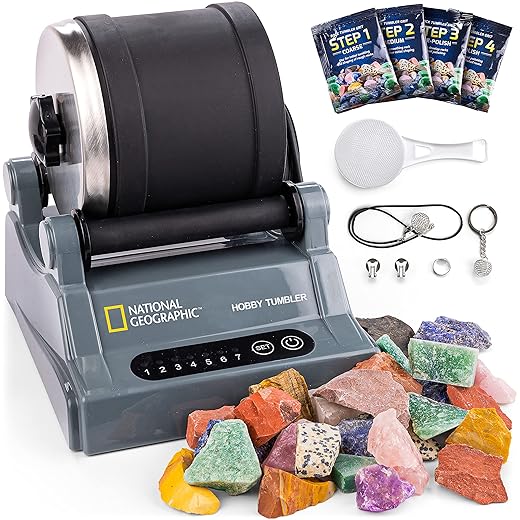
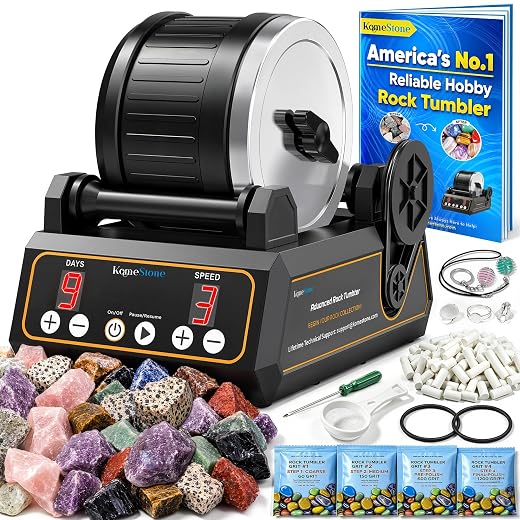

FAQs: Why does an empty tumbler turn but a loaded one stop? Why does the barrel slip?
A tumbler that works empty but stops under load needs the load and drive checked before it is run again. Added resistance can reveal that the load is too heavy or that the drive cannot turn the rollers reliably.
Barrel slip points more toward contact, placement or wear than a silent motor does. Compare the symptom with the manual’s troubleshooting guidance, and do not guess at a repair. Record the model and symptom, then contact the manufacturer if the manual does not provide a safe fix.



 Love Rock Tumbling?

Have a question? Use the form above to submit your question or comment.
I love hearing from you and seeing what you made!