

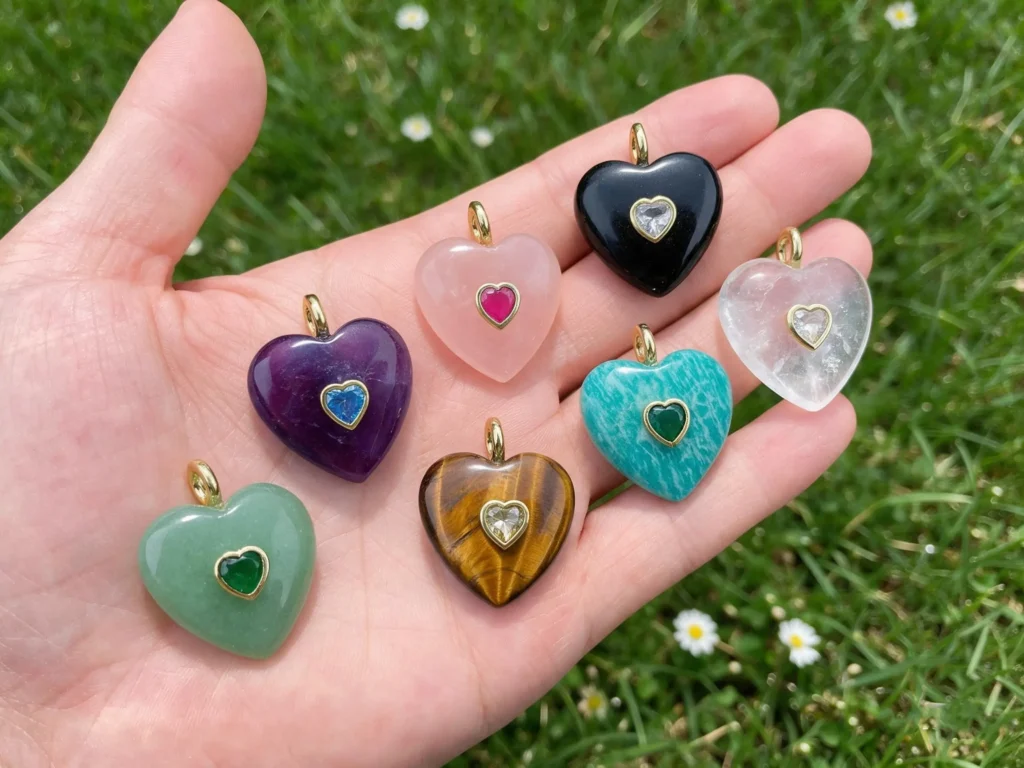
How to Make an Inlaid Gemstone Heart Pendant (DIY Lapidary Guide)
An inlaid gemstone heart pendant is a handcrafted lapidary jewelry piece featuring a polished natural stone heart base with a carved recessed cavity that houses an integrated bezel-set faceted accent gemstone, finished with a top-mounted precious metal peg bail. Combining a smooth cabochon or tumble-polished mineral body with a sparkling, flush-set faceted gem creates a high-contrast luxury aesthetic that elevates raw mineral rough into fine artisan jewelry.
A stone-in-stone inlay refers to the precision lapidary technique of recessing one finished gem or metal-framed setting directly into a carved pocket within a mineral host. A bezel cup is a shallow metal finding engineered to encase and secure a stone. A peg bail features a grooved mounting post designed to anchor directly into a blind hole drilled into the stone’s upper cleft.
In our lapidary workshop at Rock Tumble Lab, our team tested rotary tool configurations across multiple mineral varieties to establish a reliable fabrication method for this exact pendant style. If you previously explored our guide on how to make an inlaid gemstone pendant with an oval silhouette, this heart architecture introduces specialized geometry around lobe symmetry and cleft drilling. This guide provides proven workbench measurements, diamond burr selections, water coolant delivery protocols, and adhesive curing benchmarks. For workshop inquiries, visit our about us page or contact our lapidary staff.
Key Takeaways
- Design Dimensions: A 22 mm by 20 mm, 6.0–7.0 mm thick polished heart base stone featuring a centered 1.8–2.0 mm deep recessed pocket, a 6×6 mm or 7×7 mm gold-plated bezel cup, and a 1.0 mm top peg bail.
- Rotary Equipment Setup: Flexible shaft rotary machine running at 6,500–8,500 RPM equipped with 180-grit cylindrical diamond burrs, 1.5 mm ball burrs, and a flat-end cylinder diamond end mill.
- Continuous Water Irrigation: Always carve and drill under running water or in a shallow coolant bath to prevent airborne silica inhalation and eliminate thermal shock fractures in the mineral.
- Structural Adhesive: Slow-curing, two-part jeweler’s epoxy (Hughes 330 or Devcon 2-Ton) provides high tensile bond strength without yellowing or shrinkage.
- Compatible Mineral Varieties: Amethyst, Rose Quartz, Tiger’s Eye, Amazonite, Lapis Lazuli, Green Aventurine, Black Onyx, Clear Quartz, and Labradorite offer balanced hardness and excellent polish retention.
Essential Materials for Making an Inlaid Gemstone Heart Pendant
Fabricating an inlaid gemstone heart pendant requires coordinating lapidary rock carving tools with bench jewelry setting supplies. Selecting solid, fracture-free mineral slabs or pre-shaped blanks ensures clean cavity edges and prevents chipping during rotary milling.
Selecting Base Stones for Your Inlaid Gemstone Heart Pendant
The base stone forms the canvas for the entire pendant. You can shape a heart preform from a flat mineral slab or select a pre-tumbled, smooth heart stone measuring roughly 22 mm wide by 20 mm tall and 6.0 mm to 7.0 mm thick. Blanks under 5.0 mm risk puncturing through during pocket milling, while blanks over 8.0 mm feel heavy on delicate chains.
| Mineral Variety | Mohs Hardness | Fracture / Cleavage | Practical Workbench Carving Guidance |
|---|---|---|---|
| Amethyst | 7.0 | Conchoidal | Dense purple quartz with crisp edges. Polish with cerium oxide for a bright glassy luster. |
| Rose Quartz | 7.0 | Conchoidal | Translucent blush pink quartz. Maintain light tool pressure to avoid internal clouding. |
| Tiger’s Eye | 6.5 – 7.0 | Fibrous Tough | Chatoyant quartz; carve parallel to fiber direction to prevent edge plucking around the cleft. |
| Amazonite | 6.0 – 6.5 | 2-directional Cleavage | Microcline feldspar. Use gentle feeds and constant water to prevent step-fracturing. |
| Lapis Lazuli | 5.0 – 5.5 | Granular / Uneven | Carves rapidly. Keep speeds under 6,500 RPM to avoid tearing softer calcite veins. |
| Green Aventurine | 7.0 | Granular / Tough | Tough matrix resists chipping. Mica inclusions add subtle sparkle around the setting. |
| Black Onyx | 6.5 – 7.0 | Conchoidal | Uniform chalcedony structure allows razor-sharp cavity milling without micro-chipping. |
| Clear Quartz | 7.0 | Conchoidal | Water-clear rock crystal. Requires fine cavity floor polishing before cementing the cup. |
| Labradorite | 6.0 – 6.5 | Cleavable | Orient slab face parallel to lamellae to maximize optical flash beneath the accent gem. |
Examine blanks under backlighting to reject internal fractures. For mineral data, review the GIA Gem Encyclopedia and USGS Mineral Resources Program. If shaping preforms, refer to our guides on how to make a gemstone heart pendant and rock tumbling media.
If you need rough agates, jasper, or bulk raw crystals to slab and shape into base heart pendant blanks, here are top-rated options:




Rotary Tools and Diamond Burrs for Stone Inlay
To understand how to make an inlaid gemstone heart pendant with clean internal lines, milling a recessed setting pocket into hard silicates demands stable rotary equipment and diamond-coated abrasives:
- Flex-Shaft Machine: Rotary machine with foot-pedal control (Foredom SR) providing torque at 4,000–9,000 RPM.
- Diamond Core Drill Bits: 1.0 mm diamond core drills for sinking the vertical bail anchor hole into the cleft.
- Profiling Diamond Burrs: 2.35 mm shank burrs: 1.5 mm ball burr for scoring and 2.0 mm flat cylinder burr for floor leveling.
- Miniature Inverted Cone Burr: Flat-end diamond burr establishing crisp internal corners at the point and cleft.
- Rubberized Smoothing Points: Silicon carbide points (600 and 1200 grit) to erase tool chatter marks inside the pocket.
- Water Immersion Basin: Shallow tray where stones remain submerged under 3 mm of water during milling to suppress dust.
Bench Jewelry Settings, Accent Gems, and Adhesives
The central highlight of this pendant is a metal-framed faceted gem nested within the mineral face:
- Heart Bezel Cup: Flat-back stamped bezel cup in 14k gold-plated brass or silver (6×6 mm or 7×7 mm, 1.8–2.0 mm wall height).
- Faceted Accent Gemstone: Heart faceted gem matching bezel dimensions (ruby, sapphire, emerald, or cubic zirconia).
- Peg Bail Finding: Contoured jewelry bail featuring an attached 0.8–1.0 mm knurled mounting post (3.5 mm length).
- Two-Part Structural Epoxy: Optically clear, slow-curing lapidary epoxy (Hughes 330 or Devcon 2-Ton).
- Stone Setting Tools: Brass bezel rocker, polished burnisher, dop stick with wax, digital calipers, and a 10x loupe.
Step-by-Step Lapidary Process: How to Make an Inlaid Gemstone Heart Pendant
Creating this pendant requires systematic execution. Drilling and milling stone must occur in a specific order to prevent fracturing delicate edge margins.
Workshop Benchmarks: How to Make an Inlaid Gemstone Heart Pendant
Our workshop team recorded operational parameters across 12 test pendants to establish safe workbench limits:
| Operational Phase | Selected Tooling | Rotary Speed (RPM) | Coolant Protocol | Observed Failure Modes & Fixes |
|---|---|---|---|---|
| Top Bail Hole Drilling | 1.0 mm Diamond Core Bit | 4,000 – 5,000 RPM | Submersion with peck pulses | Bit wander: Dimple cleft with a small ball burr. |
| Pocket Perimeter Scribing | 1.5 mm Diamond Ball Burr | 7,500 – 8,500 RPM | Continuous water drip | Burr skitter: Anchor wrists firmly to bench block. |
| Cavity Floor Milling | 2.5 mm Flat Cylinder Burr | 6,500 – 7,500 RPM | Shallow water bath with rinse | Uneven floor: Check depth frequently with calipers. |
| Corner & Notch Squaring | Inverted Cone Diamond Burr | 5,500 – 6,500 RPM | Submerged light contact | Pocket widening: Keep abrasive burr strictly vertical. |
| Bezel Cup Inlay Bonding | Devcon 2-Ton Clear Epoxy | Manual static cure | Room temp (72 deg F / 22 deg C) | Air bubbles: Apply adhesive along perimeter only. |
Following wet carving protocols eliminates airborne particulates in compliance with OSHA Respirable Silica Standards, keeping your workshop safe.
Scribing the Heart Silhouette and Inlay Origin
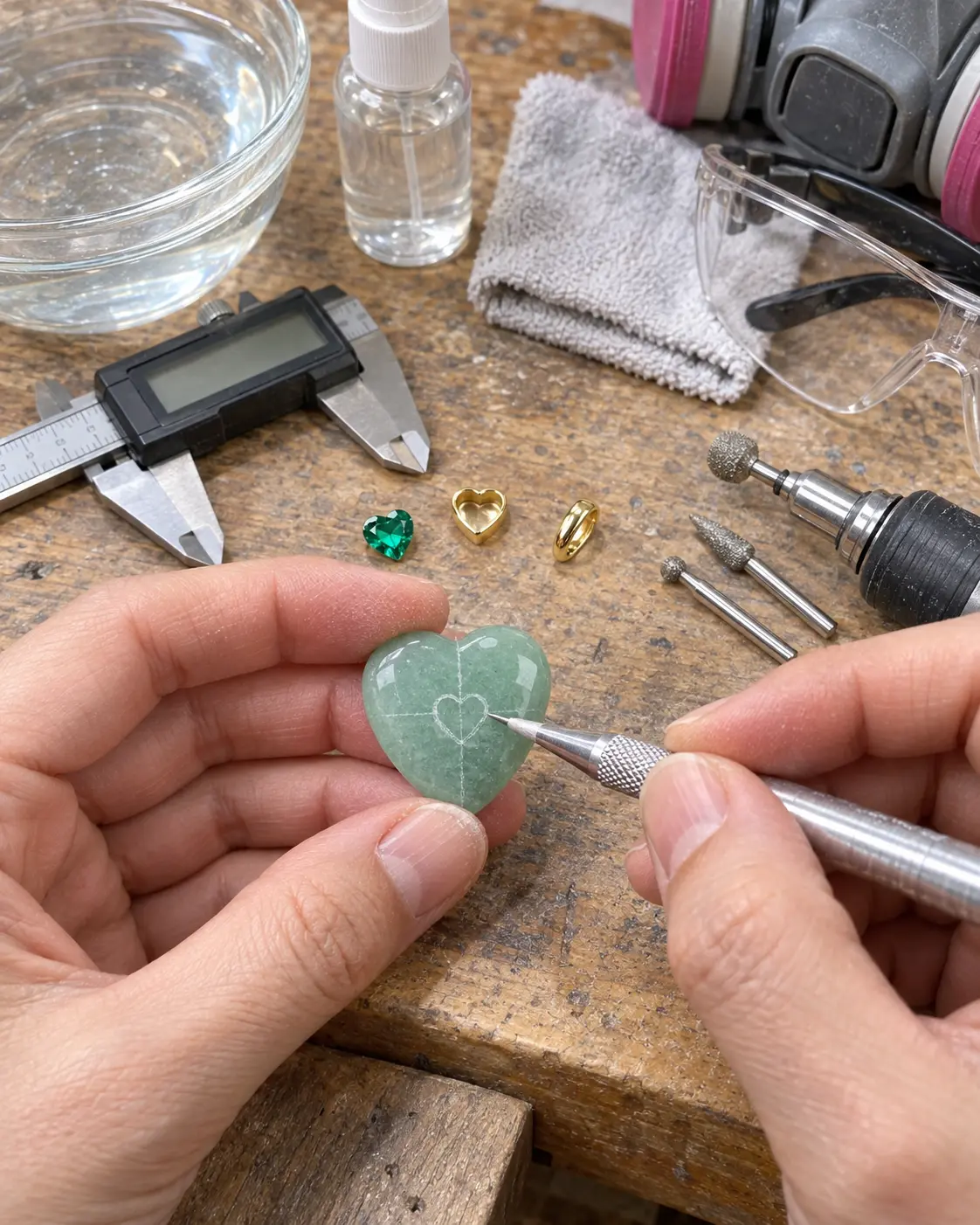
Before executing how to make an inlaid gemstone heart pendant at the bench, prepare your base stone blank from rough slab or select preforms:
- Verify Base Dimensions: Measure your polished heart stone with calipers (optimal blank: 22×20 mm, 6.5 mm thick). If shaping from rough slabs, follow our guide on how to make a gemstone heart pendant.
- Degrease the Stone: Wipe the stone face with 99% isopropyl alcohol to clear oils and lapidary wax.
- Establish Center Axes: Draw longitudinal and transverse centerlines across the dome face using an aluminum scribe to locate the inlay origin.
- Trace Bezel Profile: Invert your empty 6×6 mm or 7×7 mm heart bezel cup over the crosshair and trace its perimeter with the aluminum scribe. The scribed metal line stays visible underwater.
Drilling the Top Peg Bail Anchor Hole
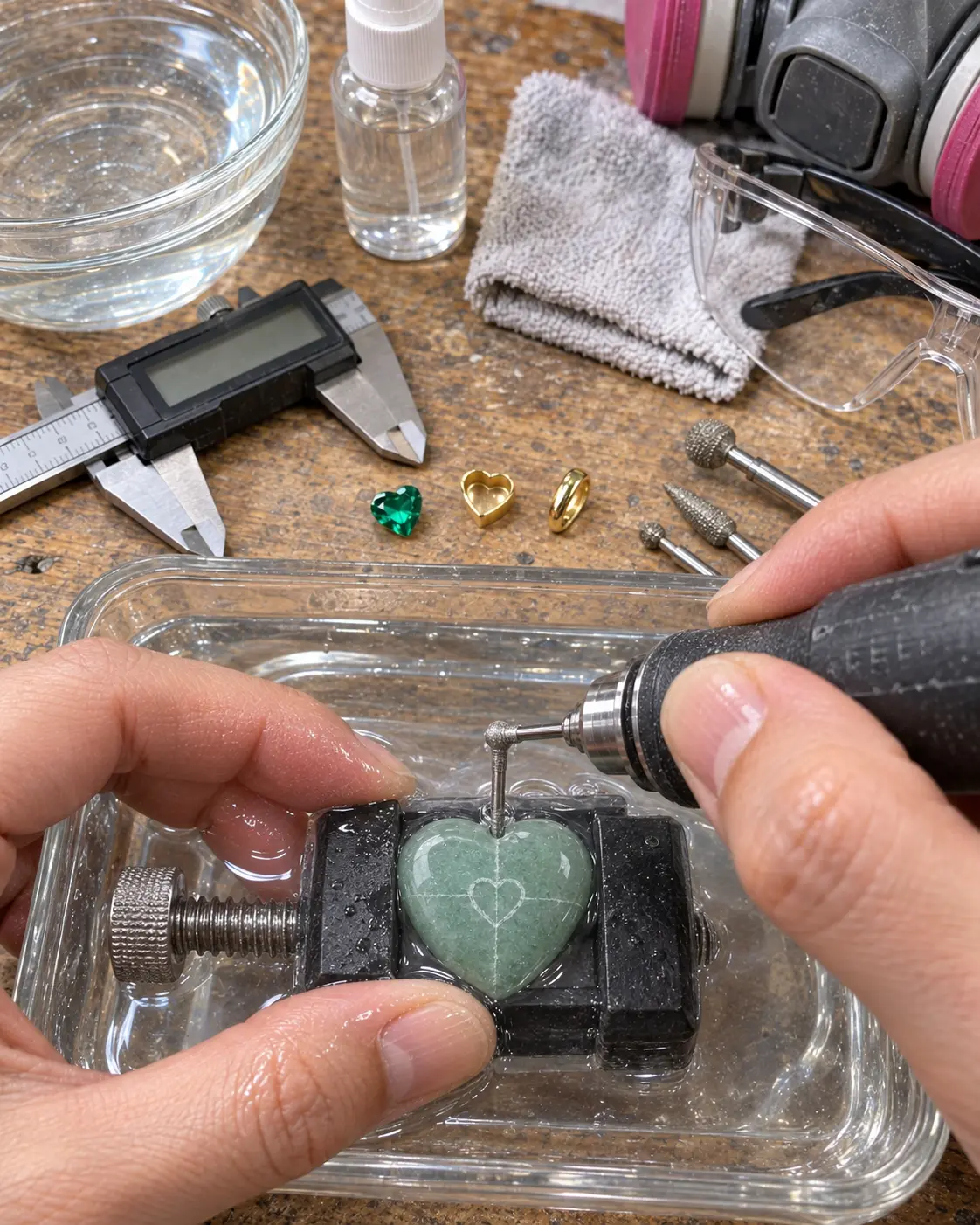
A key secret in how to make an inlaid gemstone heart pendant is always drilling the top bail hole before cutting the front cavity to eliminate internal stress concentrations:
- Mark and Dimple the Entry: Mark the center of the upper cleft. Touch with a 1.0 mm ball burr at 4,500 RPM under water to grind a starter dimple.
- Submerge and Clamp: Secure the stone in your water tray between rubber pads with the cleft submerged under 3 mm of water.
- Peck-Drill the Hole: Mount a 1.0 mm diamond core drill bit at 4,500–5,000 RPM. Lower vertically with feather-light pressure in 2-second pulses, raising slightly to clear slurry. Drill 4.0 mm deep and verify with the bail post.
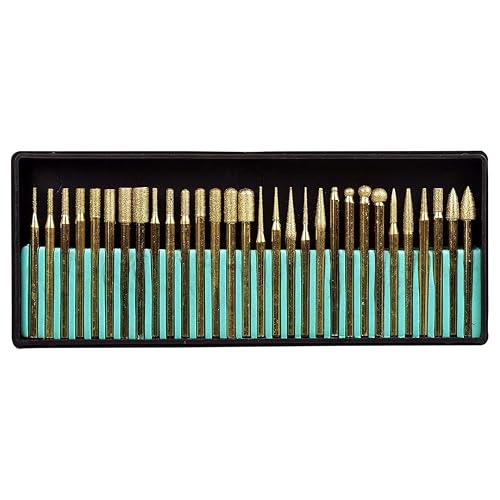
For milling a clean, level recess pocket into hard silicate gemstones and shaping delicate cleft contours without chipping, these rotary flex-shaft attachments and diamond burr sets are essential:


Milling the Recessed Pocket: How to Make an Inlaid Gemstone Heart Pendant
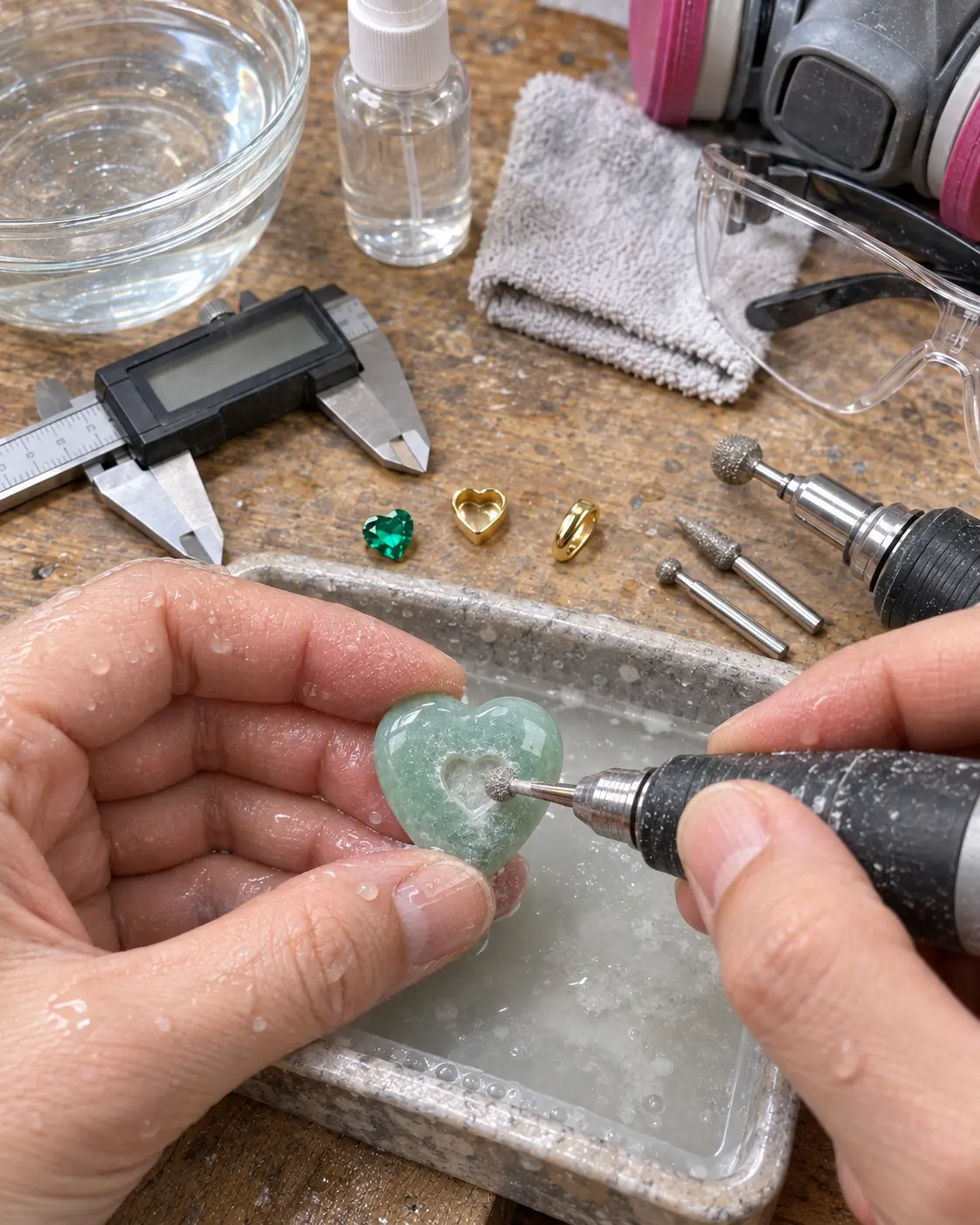
Milling the pocket requires steady, light passes to excavate a flat-bottomed recess matching your bezel cup:
- Score the Internal Boundary: Submerge the stone. Chuck a 1.5 mm diamond ball burr at 7,500 RPM. Trace just inside your scribed line to 0.5 mm depth to prevent oversize expansion.
- Excavate Bulk Mineral: Switch to a 2.0 mm cylinder burr. In small circular motions, mill away stone within the boundary, keeping the handpiece strictly vertical.
- Level the Cavity Floor: Mount a 2.5 mm flat-end cylinder burr at 6,500 RPM. Sweep in a crosshatch pattern until flat and parallel to the stone face. Target a depth of 1.8 mm to 2.0 mm using depth calipers.
- Square Margins and Corners: Square the floor-to-wall corner and the bottom point with an inverted cone burr. Polish internal walls with a 600-grit rubberized point at 5,000 RPM. For contour smoothing methods, see our guide on DIY gemstone worry stones.
- Dry-Fit the Cup: Clean and dry the stone. The empty bezel cup should slip in with minimal clearance, sitting flush with or protruding less than 0.2 mm above the mineral surface.
Setting the Faceted Accent Stone into the Bezel Cup
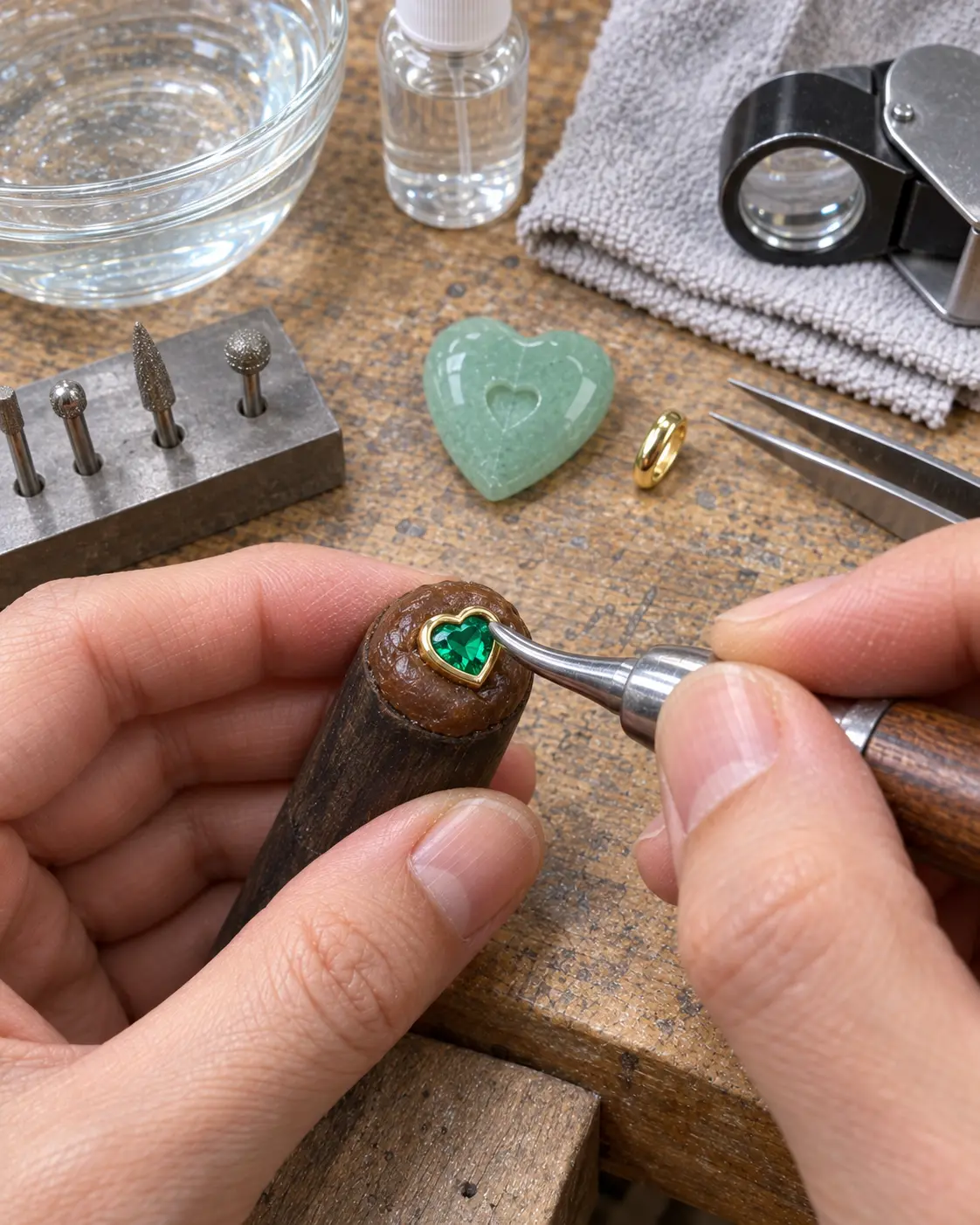
When mastering how to make an inlaid gemstone heart pendant, setting the faceted stone into the bezel cup before gluing avoids placing mechanical stress on the mineral host:
- Mount Bezel on Dop Stick: Warm dop wax on a wooden dowel and press the flat bottom of your heart bezel cup into the wax. Allow it to cool level.
- Seat the Faceted Gem: Place the faceted heart gem level inside the cup with its girdle resting 0.3 mm below the bezel wall lip.
- Rock the Bezel Rim: Using a polished brass bezel rocker, press the wall inward over the girdle at the bottom point, cleft, and outer lobes to center the stone.
- Burnish Smooth: Work around the rim with an agate burnisher using light strokes until the metal conforms tightly against crown facets. Chill to release from dop wax and clean with alcohol.
- Degrease Surfaces: Clean the cavity, cleft hole, bezel underside, and bail post with 99% isopropyl alcohol. Allow 5 minutes to dry completely.
- Mix Structural Epoxy: Mix equal parts of Hughes 330 or Devcon 2-Ton epoxy on a clean pad for 60 seconds. Let rest 2 minutes to vent micro-bubbles.
- Anchor the Bail: Transfer a drop of epoxy into the cleft hole with a wire, coat the peg bail post, and insert with a slight twist until the collar rests flush against the stone crest.
- Inlay the Bezel Cup: Spread a thin film of epoxy over the cavity floor. Press the set bezel cup firmly into the pocket with a rubber pusher, rotating slightly to seat evenly.
- Wipe Squeeze-Out and Cure: Remove excess adhesive around the bezel rim and bail with an alcohol-dampened swab before it gels. Rest the pendant flat on a silicone pad at room temperature for 24 hours. Avoid heat lamps. For beginners expanding workshop fundamentals, our rock tumbling beginner’s guide provides insights into mineral fracture toughness.
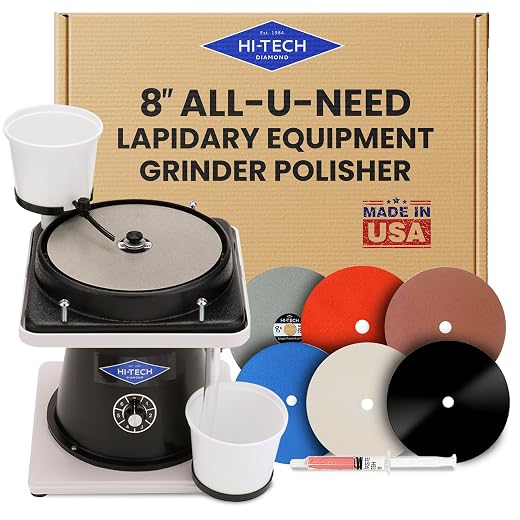
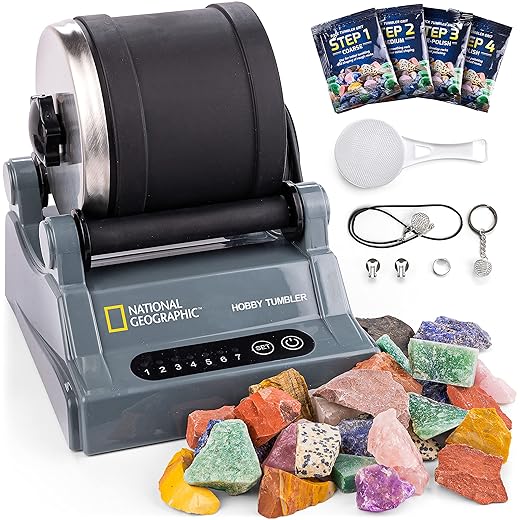
To polish gemstone slabs to a mirror gloss, refine faceted bezel edges, or tumble lapidary offcuts and cabochon preforms, here are top-performing polishing pastes, flat laps, and tumblers:

Troubleshooting Defects on an Inlaid Gemstone Heart Pendant
Even experienced lapidary artists encounter challenges when working with micro-carved stone settings. Refer to this workshop troubleshooting guide to resolve fabrication issues:
| Defect Encountered | Probable Root Cause | Practical Workbench Correction |
|---|---|---|
| Chipped Pocket Margins | Aggressive feed, coarse burrs, or dry grinding. | Switch to 240-grit burrs near the rim; submerge stone completely in water. |
| Drill Bit Skipping at Cleft | Polished curve deflects flat drill bit. | Grind a preliminary concave starter dimple with a small ball burr first. |
| Wobbling Bezel Setting | Cylinder burr left high ridges in cavity floor. | Level the cavity floor using a flat-bottom diamond end mill at 6,500 RPM. |
| Epoxy Haze Around Gem | Fast 5-minute epoxy used or excess uncleaned. | Use only slow-cure lapidary epoxy; clean margins immediately with alcohol swabs. |
| Stone Cracking Across Cleft | Excessive rotary vibration or dry friction. | Keep pocket depth under 35% of blank thickness. Submerge stone in water coolant. |
| Bezel Loose After Cure | Residual slurry or oils on surfaces. | Scrub with 99% alcohol; roughen bezel underside with 320-grit paper before gluing. |
For additional stone carving and relief profiling techniques, explore our detailed guides on how to make a fluted gemstone heart pendant and how to carve an amethyst Mexican lace agate heart.
Frequently Asked Questions About How to Make an Inlaid Gemstone Heart Pendant
Can You Make an Inlaid Gemstone Heart Pendant Without a Lapidary Cabbing Machine?
Yes. You can purchase commercially pre-shaped and tumble-polished puffed heart cabochons (commonly available in rose quartz, amethyst, black onyx, and green aventurine in 20×20 mm or 25×25 mm sizes) and perform the pocket milling, drilling, and stone setting strictly using a rotary flex shaft or micromotor handpiece. The rotary cutting, water-bath immersion, and bezel mounting steps remain identical.
Which Gemstones Work Best When Learning How to Make an Inlaid Gemstone Heart Pendant?
Natural quartz varieties—including rose quartz, amethyst, green aventurine, tiger’s eye, and black chalcedony/onyx—are the best choices for beginners learning how to make an inlaid gemstone heart pendant. These stones feature a uniform Mohs hardness of 6.5 to 7.0, lack directional cleavage, and resist chipping during delicate pocket milling. Softer or cleavable stones such as lapis lazuli (Mohs 5 to 5.5) and amazonite/labradorite (Mohs 6.0 to 6.5) should be reserved until you have developed a delicate touch with rotary diamond burrs.
How Do You Prevent the Heart Point from Snapping During Rotary Pocket Carving?
To protect the heart’s bottom point from snapping under lateral vibration, leave the bottom tip slightly blunted (at least 1.0 to 1.5 mm radius) during initial rough cabbing. Support the back of the stone fully on a flat silicone mat or neoprene bed within your water dish, and always carve with the rotary burr feeding into the stone rather than dragging outward across thin edges.
What Is the Best Rotary Speed for Carving an Inlaid Gemstone Heart Pendant?
When planning how to make an inlaid gemstone heart pendant, the optimal rotary carving speed for quartz and silicate minerals (Mohs 6.0–7.0) ranges between 6,500 and 8,500 RPM. Operating below 5,000 RPM causes the diamond burr to chatter, micro-chipping the crisp rim of your pocket. Running above 10,000 RPM flings liquid coolant off the burr head, generating local friction heat that leads to thermal shock fractures.
How Long Does an Inlaid Gemstone Heart Pendant Last with Proper Care?
When assembled with high-shear optical epoxy, an inlaid gemstone heart pendant will endure for decades of daily wear. To preserve the finish, clean the pendant using warm water, mild soap, and a soft microfiber cloth. Avoid ultrasonic cleaners, steam treatments, and harsh chemical solvents like acetone, which can soften the underlying epoxy bond. For questions about workshop setups, visit our about page or reach out through our contact page.
 Love Rock Tumbling?
Have a question? Use the form above to submit your question or comment.
I love hearing from you and seeing what you made!