

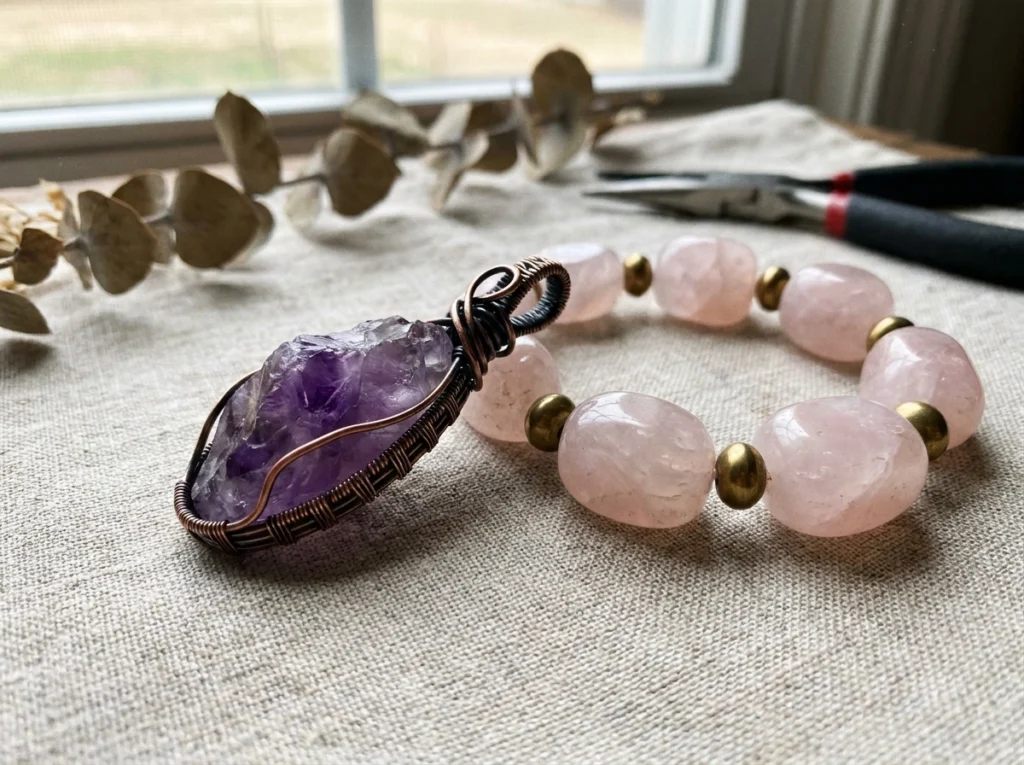
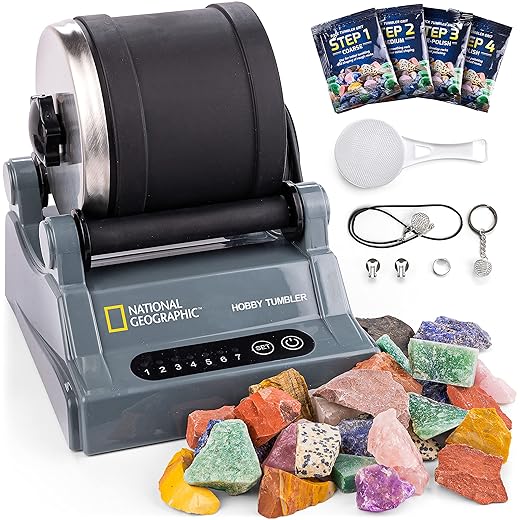
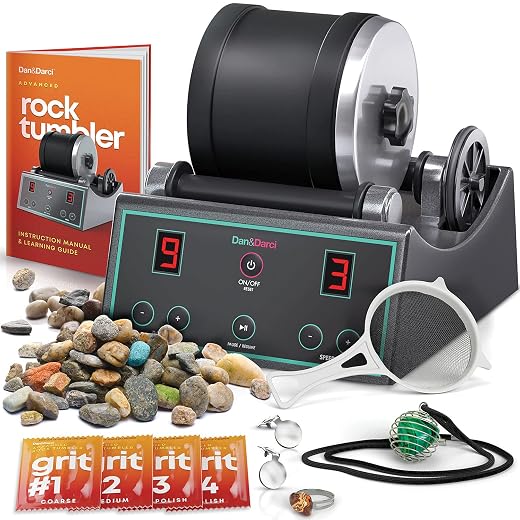
Polished tumbled stones begin as rough pieces of stone. A rock tumbler uses abrasive grit, water, and steady motion to wear away sharp edges. A commercial machine may run for nearly two weeks. The result feels smooth, rounded, and comfortable in hand.
That finish makes each piece useful beyond a display shelf. These stones suit home decor, gifts, craft projects, jewelry, planters, classroom activities, and simple games. A bright color or unusual pattern can also turn a small piece into a personal keepsake.
This guide presents a practical list of 21 ideas. It features amethyst, jasper, moonstone, and agate, plus other colorful crystals and minerals. Each example focuses on creative use rather than claims about healing or unseen powers.
A modest collection can offer more visual variety than a few large specimens. Arrange pieces in a bowl, shadow box, or labeled tray for a display that grows over the years. The sections ahead organize useful options for gifts, learning, decoration, and daily enjoyment.
What to Do With Tumbled Rocks at Home
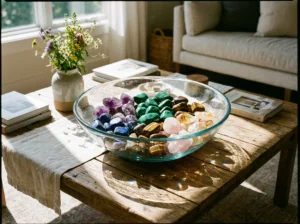
Small displays bring natural color into any home. A wooden bowl filled with tumbled stones makes a calm centerpiece, shelf accent, or desk feature. Wood also softens sound when people sort through the collection.
Display a Bowl, Jar, or Vase of Tumbled Stones
Choose medium and large pieces for a balanced look. Clear jars reveal each pattern, while a vase adds weight beneath flower stems. Fresh blooms need water, so keep the liquid above the stone layer. Silk flowers work well for long-term decoration.
Make a Vase Filler or Cosmetic Brush Holder
Fill a clear container three to four inches deep. The smooth stones hold cosmetic brushes upright and add useful weight on a vanity. Moonstone, red jasper, yellow jasper, blue lace agate, banded amethyst, and green aventurine can form a floral arrangement.
Create Candle, Picture Frame, and Shadow Box Accents
Use flat pieces around candles or along a picture frame. A shadow box gains texture from amethyst, carnelian, orange quartz, and yellow quartz. Group similar color and shape for clean decoration. Keep water away from glued pieces and delicate crystals.




Crafts You Can Make With Tumbled Stones
A simple craft table lets people turn smooth finds into useful accents. Sort polished stones by color, size, and shape before starting. Their natural variety suits family projects, gifts, and seasonal decor.
Design Rock Critters and Decorative Magnets
A hematite tumbled stone can become a bug or friendly rock critter. Add wiggle eyes, cloth, wire, and string for legs, wings, or antennae. Amethyst crystals can form bright backs, while a second set of crystals adds detail.
- Glue small wooden shapes onto stones for refrigerator magnets.
- Pick one flat piece for a face or shell.
- Mix amethyst and other polished stones for a playful display.
- Let every stone show its natural pattern.
Craft Coasters, Bookmarks, and Card Holders
For a resin coaster, arrange selected stones inside a mold. Cover them using Castin’ Craft liquid plastic resin, then let the project harden overnight before removal. Flat-sided pieces glued onto the large end of a paper clip make simple bookmarks. An extra-large stone, wire, and glue create a steady card holder or note stand. This craft style gives stones used in many ways a fresh purpose for years.
Wearable and Giftable Tumbled Rock Projects
Jewelry and gift accents give smooth mineral pieces a personal role. Rounded surfaces feel comfortable against skin, while bright color adds character. People can create lasting keepsakes for birthdays, holidays, or everyday wear.
Make Jewelry From Polished Stones
Pair small polished stones with affordable findings for necklaces, earrings, pendants, keychains, and tie tacks. Wire wrapping adds support around a stone and creates a handmade finish. A floating locket can hold tiny crystals, rose quartz, or amethyst. A pendant featuring three carnelian pieces set in silver-plated pewter shows how a few details can look elegant.
- Choose light pieces for earrings and barrettes.
- Check each setting for smooth edges.
- Keep a favorite tumbled stone inside a purse or pocket.


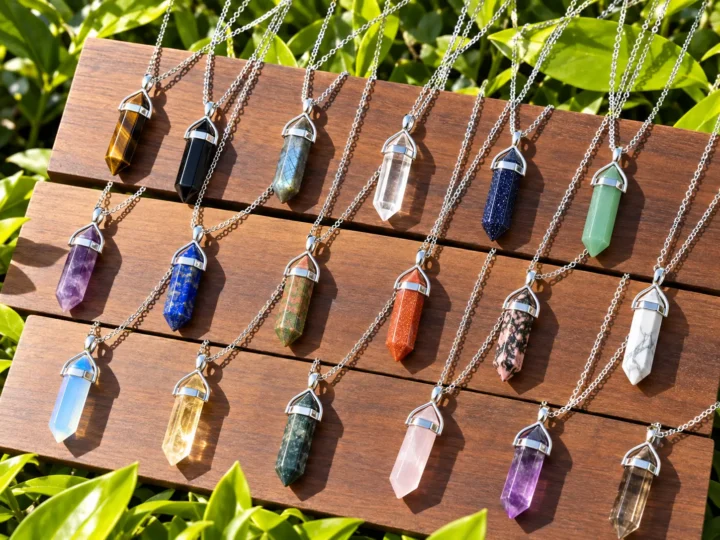
If you want a controlled jewelry shape rather than a rounded tumble, compare our 32 mm teardrop gemstone pendant tutorial with the crystal point pendant shaping guide. Both use lapidary grinding to define the outline; a tumbler will not produce those precise shapes.
Decorate Barrettes, Pins, and Ornaments
Flat-sided stones attach neatly onto barrettes using hot glue. They feel lighter than expected and add a bright accent. Plain wooden Christmas ornaments gain charm from colorful stones, tinsel, and ribbon. Mix one crystal shade or several colors for a balanced design that lasts for years.
Use Tumbled Stones to Dress Up Gift Packages
Secure a polished stone on birthday or Christmas wrapping using tape or adhesive putty. This simple detail gives collectors a personal surprise. The recipient can later add the stone among others or carry it as a small keepsake.
Garden and Plant Projects With Tumbled Rocks
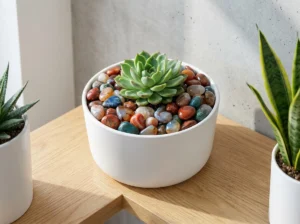
Planter ground cover adds a clean finish while giving soil a practical shield. Small polished pieces can limit erosion during watering and slow water loss through evaporation. Choose undyed material near roots, since dyed surfaces may release color.
These stones also create a wide variety of natural patterns. Moss agate, white moonstone, Botswana agate, banded amethyst, and jasper bring gentle contrast among leaves and flowers.
Create Planter Ground Cover and Flower Pot Bases
At about 0.068 pounds per cubic inch, a quarter-inch layer needs roughly 2 pounds for a 12-by-12-inch planter. A round, 5-inch pot needs about one-third pound. Spread a thin, even layer rather than covering the soil deeply.
- Use small stones around stems and along the soil surface.
- Choose undyed pieces for safer plant care.
- Pair moss agate with moonstone for a soft, natural display.
- Leave a small gap near each stem for airflow.
Build a Protective Pot Base
Arrange flat-sided pieces of similar thickness on waterproof matting. Secure each stone firmly, then place the finished pad beneath a pot. This base helps protect porches, tables, and shelves from scratches for years.
Fun, Educational, and Meaningful Uses for Tumbled Stones
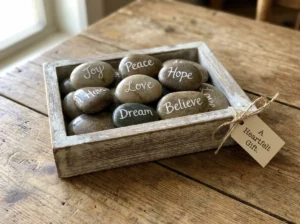
Polished mineral pieces can turn a lesson, party, or game into an active learning moment. Their shape, pattern, and color invite close observation. Simple activities build sorting, counting, and descriptive science skills.
Use Stones for Games, Rewards, and Classroom Activities
Teachers can ask students to identify minerals, group stones by color, or compare size and texture. Crystals also support math lessons through counting, adding, measuring, and pattern work. A bright tumbled stone can reward careful effort during the school day.
Groups may select stones as Bingo markers, tic-tac-toe pieces, board-game tokens, or scorekeepers. They stay easy to spot and roll around less than small plastic pieces.
Plan a Sandbox Treasure Hunt or Build a Stepping Stone Display
Hide polished stones beneath sand at a picnic or birthday party. Give each child a small bag and a safe search area. A color chart adds structure and keeps the activity fair.
Craft stores sell stepping-stone kits that accept colorful stones. Families can decorate one for a porch or shrub bed. Many people connect amethyst, rose quartz, or black tourmaline with energy and healing. Ancient Sumerians used crystals from about 4500 to 2000 BC, while Egyptians placed lapis lazuli scarabs in burials. Still, crystal healing lacks strong scientific support beyond a possible placebo effect.
Personal Uses for Carrying and Collecting Tumbled Rocks
A smooth, polished stone fits easily inside a pocket, purse, or small bag. Tumbled stones are light, durable, and easy to carry during a commute, work break, or busy day. Some people select one as a good-luck token, while others enjoy its color and texture.
Holding, sorting, or rolling a stone in the hand offers a simple tactile activity. It may help fidgeting or anxious people focus for a short time. During meditation, a stone may rest in the hand or along the body as part of a personal practice.
- Add hematite, lepidolite, malachite, rhodonite, amazonite, prehnite, and quartz to a growing collection.
- Select moss agate or black tourmaline based on color, pattern, or personal interest.
- Keep a favorite crystal in a pocket as a meaningful reminder.
- Store pieces in a soft pouch so they stay clean and do not roll around.
Some traditions connect crystals with energy or healing. These beliefs can hold personal meaning, but crystal healing does not replace medical care. Seek a qualified health professional for physical or mental concerns. A personal collection can honor curiosity, style, and memory without making health claims.

Conclusion
Tumbled stones can serve as home accents, planter details, classroom tools, jewelry, gifts, game markers, or keepsakes. A wide variety of shapes and surfaces suits each project. The best choice depends on size, form, color, and the intended setting.
The smooth finish comes from grit, water, and repeated motion inside a rock tumbler, often across nearly two weeks. This process gives each stone a rounded feel. Amethyst, rose quartz, moonstone, and blue lace agate add varied patterns. These minerals help a collection grow across many years.
Before starting, check whether a piece is dyed, coated, or heat-treated. Confirm its safety for plants, aquariums, terrariums, or long water exposure. A rock mineral may react differently than expected. Many people enjoy crystals for beauty and personal meaning. Use sound care, then let each crystal guide a practical project.
 Love Rock Tumbling?
Have a question? Use the form above to submit your question or comment.
I love hearing from you and seeing what you made!