

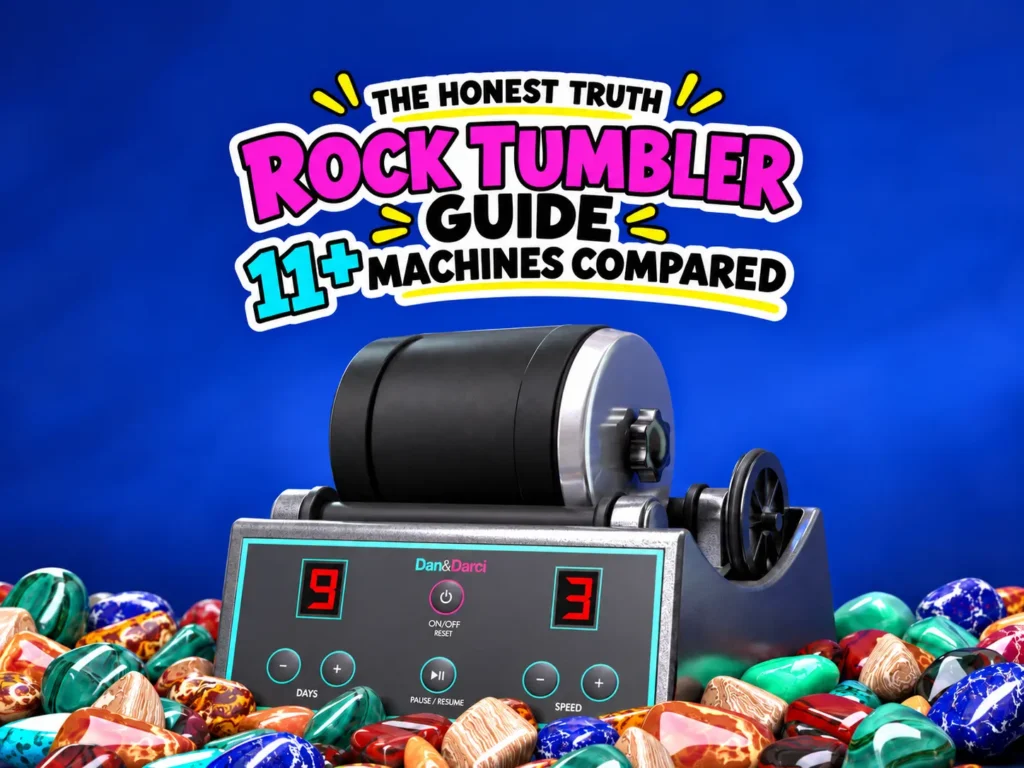
Finding the right equipment for your hobby can feel overwhelming. Many manufacturers rely on flashy marketing, but you deserve the honest truth about how these devices perform in your home. This guide evaluates more than 11 models to help you make an informed choice.
We look past the advertisements to examine practical differences in capacity, noise levels, and long-term durability. Whether you are a beginner or a seasoned pro, understanding these nuances is vital for your success.
Our analysis covers essential supplies, polishing performance, and maintenance tips for every budget. By choosing the right rock tumbler, you ensure your projects shine exactly as you imagined. Let’s dive into the data to find the perfect fit for your workshop.
Key Takeaways
- Compare over 11 popular models based on real-world performance.
- Focus on critical factors like noise reduction and motor durability.
- Learn how to select the best machine for your specific budget.
- Access expert advice on maintenance and essential polishing supplies.
- Avoid common pitfalls by understanding actual machine capacity limits.
What to Expect From This Rock Tumbler Comparison
Finding the perfect machine requires looking beyond marketing claims to see how a device truly performs. This analysis evaluates a wide range of rotary equipment designed for everyone from curious beginners and families to dedicated hobbyists and rock clubs. By examining the pros, cons, and real-world utility of each model, these guides for rock tumbling help you invest your money wisely.
Who benefits most from a rotary rock tumbler
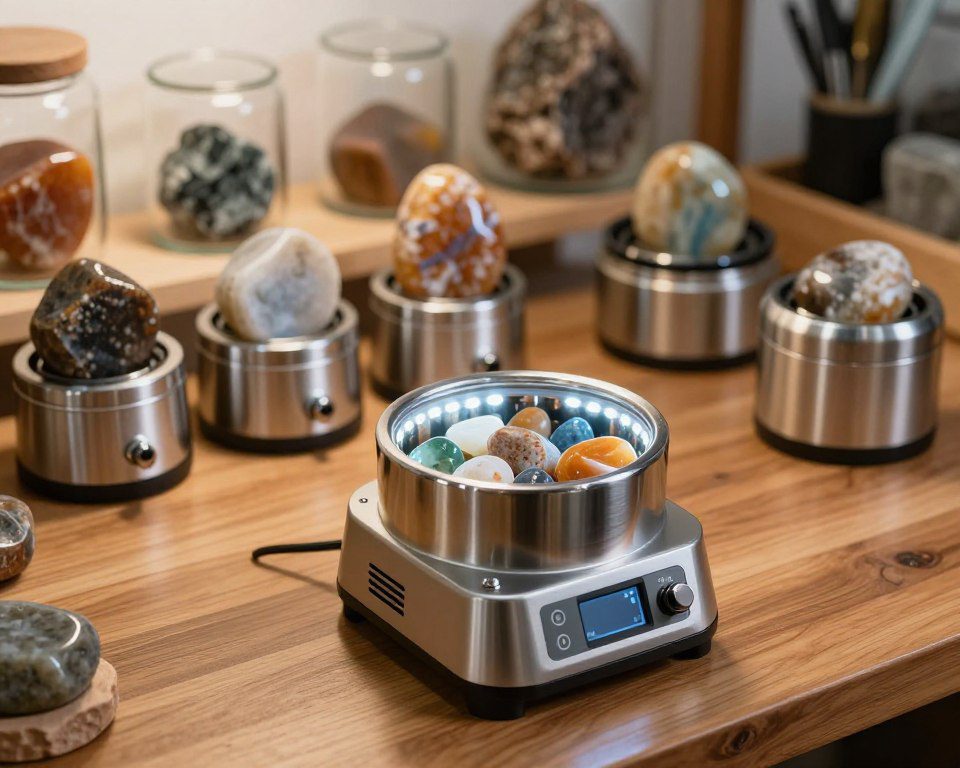
Rotary machines are the gold standard for those who value consistency and simplicity. Beginners often find these units easier to operate than vibratory models, making them ideal for home use. Families frequently choose these devices for educational projects, while serious hobbyists rely on them for their rugged, long-term reliability.
How capacity, noise, durability, and kit contents affect value
When selecting a rock tumbler, you must weigh several technical factors against your specific goals. Capacity determines how many stones you can process at once, which directly impacts your project timeline. Noise levels are equally important, especially if you plan to run the machine in a living area or bedroom.
Durability is the final piece of the puzzle, as a machine that breaks after one cycle offers poor value. We also examine the included kit contents, such as starter grit and rough rocks, to see if they provide genuine utility or just extra clutter. A high-quality machine should balance these features to ensure a smooth, frustration-free experience.
Why advertised grit, barrel size, and polishing claims can be misleading
It is easy to be swayed by flashy packaging, but performance often depends on variables that manufacturers rarely highlight. Advertised barrel capacity does not always account for the necessary space for water and media, which are essential for a proper polish. Similarly, the amount of grit included in a kit may not be enough to finish a full batch of hard stones.
True results depend on your operating habits, the hardness of your rocks, and the quality of your polishing media. By understanding these nuances, you can avoid common pitfalls and achieve professional-looking results. Relying on these guides for rock tumbling ensures you have the context needed to make the right choice for your next project.
How the Best Rock Tumbler Options Compare
To identify the best rock tumblers, we must first establish a consistent way to measure their performance and value. By applying a standardized framework, we can cut through the noise and focus on what truly matters for your hobby.
Comparison criteria for capacity, speed, noise, reliability, and price
When evaluating top rated rock tumblers, we look at five core metrics. Capacity determines how many stones you can process at once, while motor speed influences the overall cycle time. Noise levels are critical for home use, and reliability ensures the machine survives long, multi-day runs. Finally, price helps us determine the overall value proposition for the consumer.
Single-barrel versus dual-barrel designs
The choice between a single or dual-barrel setup often comes down to your workflow. A single-barrel unit is perfect for beginners who want to focus on one batch at a time. Conversely, dual-barrel designs allow you to run different grit stages simultaneously, significantly increasing your overall throughput.
Starter kits versus machines intended for serious polishing
Many rock tumbler reviews highlight the difference between entry-level kits and professional-grade equipment. Starter kits usually include everything a novice needs to begin immediately, including rough rocks and grit. Professional machines, however, prioritize motor longevity and barrel durability for those who plan to polish stones for years to come.
At-a-glance comparison table for all 12 machines
The following table provides a quick overview of the models we analyzed. Use this to compare key features before diving into the specific details of each unit.
| Model Name | Barrel Type | Primary Use | Noise Level |
|---|---|---|---|
| National Geographic Hobby | Single | Beginner | Moderate |
| Lortone 33B | Dual | Intermediate | Low |
| Thumler’s Model B | Single | Professional | Low |
| Chicago Electric 67631 | Dual | Budget | High |
Affordable and Beginner-Friendly Rock Tumblers
Many hobbyists begin their journey by looking for an affordable rock tumbler that balances cost with performance. While entry-level models often require compromises in durability or barrel capacity, they provide a low-risk way to explore the hobby. Reading through rock tumbler reviews helps clarify which machines offer the best value for your specific needs.




National Geographic Hobby Rock Tumbler
Included supplies and beginner-focused controls
This model is a popular beginner rock tumbling kit that comes with everything needed to start immediately. It features simple, one-touch controls that allow users to set the tumbling duration without complex programming.
Advantages for children, families, and casual projects
The machine is designed with safety and ease of use in mind, making it perfect for younger enthusiasts. Families often appreciate the quiet operation compared to industrial-grade alternatives.
Limitations in durability, capacity, and polishing consistency
Users should note that the plastic barrel may wear down over time with heavy use. Additionally, the motor is not intended for continuous, multi-year operation, which can lead to inconsistent results on very hard stones.
Best use for learning basic rock tumbling
It serves as an excellent educational tool for those who want to learn the basics of the process. It is best suited for soft-to-medium hardness rocks that polish quickly.
Discovery Kids Rock Tumbler
Compact design, cycle controls, and included materials
The Discovery Kids unit offers a compact footprint that fits easily on a desk or workbench. It includes a basic set of rough stones and grit to get the first batch moving.
Why the simple setup suits first-time users
The straightforward interface removes the intimidation factor for those new to the hobby. It is a true plug-and-play experience for anyone curious about how rocks become polished gems.
Tradeoffs in noise, barrel size, and long-term value
While convenient, the small barrel limits the volume of stones you can process at once. The motor can also be somewhat noisy, which may require placing the unit in a garage or basement.
Best fit for supervised family use
This machine is ideal for parents and children working together on a weekend project. It provides enough functionality to keep kids engaged without requiring deep technical knowledge.
Dan&Darci Professional Rock Tumbler Kit
Barrel capacity, accessories, and instructional support
This beginner rock tumbling kit provides a generous barrel capacity for its price point. It includes a comprehensive guide that helps users understand the different stages of the polishing process.
Strengths of the all-in-one beginner kit
The inclusion of high-quality grit and a variety of rough stones makes it a great value. It eliminates the need to hunt for separate supplies during your first few months of polishing.
Weaknesses when polishing larger or harder batches
The motor may struggle if the barrel is packed too tightly with very hard rocks. It is not designed for heavy-duty, long-term commercial use.
Who should choose it over a bare machine
If you prefer a complete package that works right out of the box, this is a superior choice. It saves time and effort compared to buying a bare machine and sourcing your own media.
Leegol Electric 3 lb Rock Tumbler
Motor, barrel construction, and timer features
The Leegol 3 lb rock tumbler features a sturdy motor and a reliable rubber barrel. The built-in timer is a helpful feature that allows you to automate the cycle length.
Value advantages for hobbyists on a budget
This unit offers a great balance of features for the price. It is often cited in rock tumbler reviews as a solid middle-ground option for those who have outgrown basic toy-grade machines.
Expected noise, replacement-part, and durability concerns
Like many budget-friendly models, the noise level is noticeable during operation. Finding specific replacement parts can sometimes be challenging, so proper maintenance is essential.
Best projects for its single-barrel capacity
It is perfect for small batches of semi-precious stones or quartz. The single-barrel design is efficient for hobbyists who prefer to focus on one type of rock at a time.
Chicago Electric Power Tools Dual Drum Rotary Rock Tumbler 67631
Two-barrel capacity and batch-separation benefits
The dual-drum design allows you to run two different stages of grit simultaneously. This is a massive advantage for anyone looking to speed up their workflow.
What the low purchase price gets right
For the cost, you get a versatile machine that can handle double the volume of a single-barrel unit. It is a highly cost-effective way to scale up your production.
Common concerns about motor longevity and availability
The motor is functional but requires careful monitoring to prevent overheating. Some users find that the belts need occasional replacement to keep the drums spinning smoothly.
Best choice for experimenting with multiple grit stages
This rock tumbler is the best choice for those who want to experiment with different polishing stages at once. It is a workhorse for the budget-conscious hobbyist who wants to see faster results.
Durable Machines for Frequent Rock Polishing
When you move beyond basic hobby kits, choosing a machine that lasts for years becomes the priority. Frequent users need equipment that handles the stress of continuous, multi-day cycles without failing. These top rated rock tumblers are built to withstand the rigors of long-term use.
Lortone 3A Rock Tumbler
Single 3-pound barrel and proven rotary design
The Lortone 3A is a classic workhorse in the industry. Its simple, robust design ensures that it remains a favorite for those who want a reliable machine.
Advantages in reliability, repairability, and ease of use
This model is famous for its long-lasting motor and ease of maintenance. Parts are widely available, making it a smart investment for any hobbyist.
Limitations for large batches and parallel grit stages
Because it only features one barrel, you cannot run multiple grit stages at once. It is best suited for those who prefer a steady, single-batch workflow.
Best match for beginners who want a long-term machine
If you are a beginner looking for a rock tumbler that will not need replacing in a year, the 3A is an excellent starting point.
Lortone 33B Rock Tumbler
Dual 3-pound barrels and flexible batch management
The 33B offers the same legendary reliability as the 3A but adds a second barrel. This allows you to process two different batches simultaneously.
Why experienced hobbyists value its dependable construction
Experienced users appreciate the consistent performance of the Lortone line. The dual-barrel setup is perfect for those who want to keep their polishing stages moving forward.
Noise, footprint, and higher upfront-cost considerations
While it is more expensive, the added capacity justifies the cost. Be aware that running two barrels does increase the overall noise level in your workspace.
Best use for polishing different materials at once
This machine is ideal for hobbyists who want to experiment with different stone types or grit levels without waiting for one batch to finish.
Lortone 45C Rock Tumbler
Large-capacity barrel configuration and production potential
The 45C features a larger barrel, which is perfect for those who have outgrown the standard 3-pound capacity. It is designed for high-volume production.
Strengths for families, clubs, and frequent tumbling
Its size makes it a great choice for clubs or families who process large amounts of material. It handles heavy loads with ease.
Weight, operating cost, and space requirements
This unit is heavier and requires more shelf space than smaller models. You should ensure your workspace can support the extra weight and power needs.
Who should upgrade from a 3-pound machine
If you find yourself constantly waiting for more space, this is the logical next step in your hobby.
Thumler’s Tumbler A-R1 Rock Tumbler
Single-barrel layout and adjustable operating controls
Thumler’s Tumbler is another industry leader known for rugged durability. The A-R1 provides a compact, efficient solution for small batches.
Benefits of its compact, established design
The design is time-tested and very reliable. It fits easily on most workbenches without taking up too much room.
Capacity and throughput limitations for larger collections
It is not designed for massive collections, so it may feel slow for those with high output needs. It is best for focused, small-batch work.
Best fit for controlled small-batch polishing
This machine is perfect for users who want precise control over their polishing process.
Thumler’s Tumbler A-R12 Rock Tumbler
Dual 3-pound barrels and independent batch flexibility
The A-R12 gives you the benefit of two barrels in a compact footprint. It is a versatile tool for any serious hobbyist.
Advantages for testing grit, stones, and polishing schedules
Having two barrels allows you to test different variables side-by-side. This is essential for those who want to master the art of polishing.
Potential maintenance and replacement-part considerations
Like all mechanical devices, it requires occasional maintenance. Fortunately, parts for this rock tumbler are easy to source.
Best choice for serious hobbyists without a large machine
It strikes a perfect balance between capacity and size for the dedicated enthusiast.
Thumler’s Tumbler Model B Rock Tumbler
Large barrel capacity and heavy-duty operating design
The Model B is a beast of a machine. It is built for heavy-duty, continuous operation that few other models can match.
Why it suits high-volume and demanding projects
If you are running a club or producing large quantities of polished stones, this is the machine you need. It is built to run for years.
Higher cost, noise, and space tradeoffs
It is loud and expensive, but the performance is unmatched. You will need a dedicated space for this heavy-duty equipment.
Best match for clubs, artists, and frequent users
For those who treat rock tumbling as a serious craft, the Model B is the gold standard.
National Geographic Professional Rock Tumbler
Motor, barrel size, timer, and accessory package
This model is a modern entry in our rock tumbler reviews. It includes convenient features like a built-in timer and a comprehensive accessory kit.
Convenience features that appeal to newer users
The digital interface makes it very user-friendly. It is a great bridge between entry-level kits and professional-grade equipment.
How its long-term durability compares with Lortone and Thumler’s Tumbler
While it offers great features, it may not match the raw, mechanical longevity of the older, established brands. However, it remains one of the top rated rock tumblers for home use.
Best use for moderate home polishing
It is perfectly suited for the hobbyist who wants professional results without the complexity of industrial-grade machinery.
How the Machines Perform in Real Rock-Tumbling Work
The true test of any rock tumbler happens during the long, multi-day cycles required for polishing. While initial setup is simple, the mechanical stress of constant rotation reveals the true quality of the motor and housing. Understanding these operational realities helps you maintain your equipment for years of successful use.
Noise and vibration during multi-day tumbling cycles
Most rotary machines generate a steady hum that can become noticeable over a week of continuous operation. Placing your unit on a rubber mat or a heavy towel significantly reduces vibration transfer to your floor or table. Consistent, low-level noise is usually a sign of a healthy motor, while sudden rattling often indicates an unbalanced load.
Motor endurance and the importance of replacement belts
Even the most robust rock tumbler relies on a drive belt to transfer power from the motor to the barrel. These belts naturally wear down over time due to heat and friction. Keeping a spare belt on hand is one of the most important rock polishing tips for avoiding long project delays.
Barrel sealing, barrel liners, and cleanup effort
A secure seal is vital to prevent messy slurry leaks during the tumbling process. Always inspect the rubber gasket for grit buildup before closing the lid, as even a tiny grain can break the seal. Machines with high-quality rubber liners are easier to clean and provide better sound dampening than hard plastic alternatives.
Capacity efficiency when rocks must remain properly cushioned
Efficiency is not just about how many rocks you can fit inside the barrel. You must leave enough room for water and ceramic media to cushion the stones during the cycle. Overloading the barrel prevents the rocks from moving freely, which leads to uneven results and potential damage to the motor.
Which machines deliver the most consistent polish
Consistency depends heavily on the stability of the machine and your adherence to proper loading techniques. While premium models often feature better motors, even an entry-level unit can produce excellent results if the barrel is loaded correctly. The following table highlights key performance factors to consider for your next project.
| Feature | Entry-Level Units | Professional Models |
|---|---|---|
| Motor Longevity | Moderate | High |
| Noise Level | Noticeable | Quiet |
| Maintenance Needs | Frequent | Minimal |
| Polish Consistency | Variable | Excellent |
Choosing the Right Rock Tumbler for Your Budget and Projects
Finding the perfect machine requires balancing your initial budget against the long-term durability you expect from your equipment. While many options exist, the best rock tumblers are those that align with your specific project goals and how often you plan to run your cycles.
Best rock tumbler for a first-time user
If you are just starting, a beginner rock tumbling kit is often the most cost-effective choice. These packages typically include the machine, a supply of rough rocks, and the necessary grit stages to complete your first batch without needing extra purchases.
Best option for children and supervised family activities
For families, safety and simplicity are the top priorities. Look for machines with simple, user-friendly controls and sturdy barrels that can withstand frequent handling. These units are designed to make the learning process fun and engaging for younger hobbyists.
Best machine for quiet household operation
Noise can be a significant factor if you plan to run your tumbler in a living area. Some of the top rated rock tumblers feature specialized motors and thick rubber barrels that dampen sound effectively. Choosing a model known for quiet operation ensures your hobby does not disrupt your home life.
Best dual-barrel machine for experimenting with grit stages
Advanced users often prefer dual-barrel designs to increase efficiency. These machines allow you to run two different stages of grit simultaneously or process two separate batches of rocks at once. This flexibility is essential for those who want to speed up their production.
Best heavy-duty choice for frequent polishing
When you move beyond occasional use, you need a machine built for endurance. Heavy-duty models feature high-quality motors and reinforced components that handle the stress of continuous, multi-day cycles. Investing in a robust machine prevents the need for frequent repairs or replacements.
When paying more for Lortone or Thumler’s Tumbler makes sense
While entry-level machines are great for testing the waters, professional-grade brands like Lortone or Thumler’s offer superior serviceability. You should consider these brands when you are ready to commit to the hobby long-term. Their parts are easily replaceable, and their performance consistency is unmatched.
| User Type | Recommended Focus | Key Benefit |
|---|---|---|
| Beginner | All-in-one kits | Convenience |
| Family | Safety and ease | Engagement |
| Serious Hobbyist | Lortone/Thumler’s | Durability |
Ultimately, your choice should reflect your dedication to the craft. Whether you start with a simple kit or jump straight into professional gear, the right machine will provide years of rewarding results.
How to Use a Rock Tumbler Successfully
Learning how to use a rock tumbler effectively transforms rough stones into polished treasures. While the process takes time, following a structured workflow ensures your stones emerge with a professional-grade shine. Consistency is the secret to success in this hobby.
Sort rocks by hardness, size, and surface condition
Before starting, you must group your stones by their Mohs hardness level. Mixing soft stones with hard ones often leads to the softer rocks being ground away entirely. Aim for a variety of sizes to ensure the barrel tumbles effectively, as this helps the grit reach all surfaces.
Load the barrel to the correct level with filler material
Fill your barrel about two-thirds to three-quarters full for the best results. If the barrel is too empty, the rocks will impact each other too hard and cause damage. Use ceramic media or plastic pellets as filler material to cushion the rocks and improve the movement of the slurry.
Follow the coarse, medium, fine, and polishing stages
Rock tumbling is a multi-stage process that requires patience. You will progress through different grit sizes, starting with coarse to shape the rocks and ending with a fine polish. These guides for rock tumbling emphasize that skipping a stage will result in a dull or scratched finish.
| Stage | Grit Size | Typical Duration |
|---|---|---|
| Coarse | 60/90 | 5-7 Days |
| Medium | 120/220 | 5-7 Days |
| Fine | Pre-Polish | 5-7 Days |
| Final Polish | Polish Powder | 7+ Days |


Clean barrels and rocks between every grit change
Thorough cleaning is vital to prevent cross-contamination. Even a tiny grain of coarse grit left in the barrel can ruin your final polish. Use a dedicated brush and plenty of water to scrub every crevice of your stones and the interior of the barrel.
Rock polishing tips for avoiding bruising, cracks, and dull finishes
To prevent bruising, ensure your barrel is not overloaded and that you use enough cushioning media. If you notice cracks, your rocks may have had pre-existing fractures that opened during the coarse stage. Follow these rock polishing tips by inspecting your stones carefully after each cycle to remove any that are not progressing well.
Safety practices for grit dust, slurry disposal, and machine placement
Always wear a dust mask when handling dry grit to avoid inhaling fine particles. Never pour slurry directly down your household drains, as it can harden and cause expensive plumbing clogs. Instead, dispose of the slurry in a designated outdoor area or a trash bin. Place your machine on a stable, level surface in a well-ventilated area to manage noise and vibration effectively.
Where to Buy Rock Tumblers and Replacement Supplies
Whether you are a beginner or a pro, knowing where to buy rock tumblers ensures you get the best value for your money. Making an informed purchase decision helps you avoid low-quality machines that fail after only a few cycles. By researching your options, you can secure a reliable rock tumbler that lasts for years.
Comparing manufacturer stores, specialty rock shops, and major retailers
Manufacturer websites are often the best starting point for finding authentic parts and direct customer support. Specialty lapidary shops provide expert advice that big-box retailers simply cannot match. While major online marketplaces offer convenience, they may lack the specific technical knowledge required for advanced hobbyists.
Checking warranty coverage, replacement belts, barrels, and liners
Before finalizing your purchase, always verify the warranty terms provided by the seller. A reputable brand will offer clear support for motor failures and structural defects. You should also confirm that the vendor stocks essential maintenance items like replacement belts, barrels, and rubber liners.
Evaluating used rock tumblers and discontinued models
Buying a used rock tumbler can be a cost-effective strategy if you know what to inspect. Always check the motor for unusual noises or burning smells during a test run. Examine the barrel for deep cracks and ensure the drive rollers show minimal signs of uneven wear.
Calculate the total cost of ownership before committing to a second-hand unit. You may need to purchase new belts or a fresh barrel to bring the machine back to peak performance. If the price of these parts exceeds the cost of a new entry-level model, it is usually better to buy new.
Buying grit, ceramic media, and rough rocks without overspending
Consumables represent a significant portion of your long-term budget. Purchasing grit and ceramic media in bulk from lapidary suppliers is almost always cheaper than buying small, pre-packaged kits. Look for local rock clubs or regional mineral shows to find high-quality rough rocks at competitive prices.
| Source Type | Best For | Support Level |
|---|---|---|
| Manufacturer | Warranty & Parts | High |
| Specialty Shop | Expert Advice | Very High |
| Major Retailer | Fast Shipping | Low |

Conclusion
Finding the right rock tumbler requires balancing your specific goals with the realities of home operation. Your choice hinges on your available budget, the volume of stones you plan to process, and your tolerance for mechanical noise.
This guide examined 11+ machines to help you navigate the market. The provided comparison table for all 12 models serves as a quick reference for your final decision. Whether you choose a starter kit from National Geographic or a heavy-duty unit from Lortone or Thumler’s Tumbler, your success depends on matching the equipment to your personal needs.
Consider how often you intend to polish rocks and where you will store the machine. Reliable performance often comes from machines with accessible replacement parts like belts and barrels. Prioritize safety by managing grit dust and slurry disposal properly in your workspace.
Your journey into lapidary arts starts with a machine that fits your lifestyle. Take time to evaluate your long-term expectations before making a purchase. A well-chosen tumbler provides years of enjoyment and beautiful results for every batch of stones you process.


 Love Rock Tumbling?
Have a question? Use the form above to submit your question or comment.
I love hearing from you and seeing what you made!